
The Refuge That Faith Provides
Many people think faith is just convincing yourself that everything will turn out fine. The Bible gives a different answer: God is the refuge, and faith means trusting Him as shelter, help, and steady ground when life shakes. This is real dependence on God, not vague optimism or self-help confidence.
Key takeaways
- Hebrews 11:1 and 11:6 define faith as confident trust, not guessing, and one verse in context can change how you read a promise.
- Psalm 46 and Psalm 91 show God as refuge in trouble, so the practical response is to run to Him before fear takes over.
- A single obedient step today matters more than vague intentions, because faith shows up in action, not only in emotion.
- Romans 10:17 points you back to regular Scripture exposure, which means building trust over time instead of waiting for a feeling.
- Before claiming any promise, read the surrounding verses and check who is being addressed, especially in passages that sound universal.
What the Bible Means When It Calls God a Refuge
A refuge is shelter that still stands when danger, grief, or uncertainty closes in. In Scripture, that means God is not a distant idea you admire from afar, but the One you run to for safety, steadiness, and help when your own strength feels thin.

Hebrews 11:1 and Hebrews 11:6 give that trust sharp definition. Faith is “the assurance of things hoped for, the conviction of things not seen,” and it believes that God exists and rewards those who seek Him. So faith is not blind guessing, but confident reliance on God’s character and promise, as Desiring God explains in its reading of the passage: Desiring God.
Psalm 46 presents God as a “present help in trouble,” and Psalm 91 pictures His people as covered, guarded, and kept near. Those psalms do not describe a distant God watching from the edge of the storm; they describe a faithful Lord who is active in the storm and worthy of trust inside it.
That matters because biblical faith is not the same as trying to stay positive. It means relying on who God is and what He has said, even when your emotions are unsettled and your circumstances still look uncertain.
This article is about faith in God as refuge, not about generic confidence, motivational thinking, or pretending pain is not real.
How Scripture Connects Trust Across Key Passages
| Passage or source | Main picture of faith | What it says about trust | How it shapes daily life | Common misunderstanding to avoid |
|---|---|---|---|---|
| Psalm 46 | God is a present help and strong refuge in trouble | Trust means running to God before fear becomes control | You pray, stand firm, and keep perspective when life shakes | Treating the psalm as a promise of an easy life |
| Psalm 91 | God covers, guards, and stays near His people | Trust is resting under God’s care, not pretending danger is unreal | You lean on God’s protection while still living wisely | Reading the psalm as a blanket guarantee against all harm |
| Hebrews 11:6 | Seeking God with belief that He rewards those who seek Him | Trust includes confidence in God’s goodness and responsiveness | You keep seeking God even when results are not immediate | Thinking faith is only about believing harder |
| Proverbs and related trust passages | Lean not on your own understanding, acknowledge God, wait on Him | Trust includes surrender and obedience, not control | You choose wise steps while leaving outcomes with God | Using a verse as a slogan instead of reading it in context |
Taken together, these passages build one clear picture: trust is active, obedient, and patient. It does not deny danger, but it refuses to let danger become the loudest voice in the room.
The C.S. Lewis Institute points to John 1:18 and Luke 10:22 to show that we know God truly through what He reveals about Himself. That keeps trust from drifting into imagination, because faith is rooted in revelation, not in whatever feeling happens to be strongest that day: C.S. Lewis Institute.
That is why context matters so much. A verse pulled from its setting can be turned into a slogan, but a verse read in context becomes a promise, a warning, or a pattern for wise living.
How to Respond With Prayer, Obedience, and Daily Faith
You respond to God as refuge by praying His Word back to Him in your own language. When Psalm 46 says He is present help, you can pray, “Lord, be my help today.” When Hebrews 11:6 says He rewards those who seek Him, you can ask for the strength to keep seeking even before you see the outcome.
You should also tell God the truth about your fear. Honest prayer is not faith’s enemy, because bringing weakness into God’s presence is often the most faithful thing you can do when grief, pressure, or uncertainty feels heavy.
One obedient step matters more than a dozen vague intentions. If you already know what God has said, act on that light first, even if your emotions have not caught up yet, because faith often shows up as the next right step, not a dramatic feeling.
Regular exposure to Scripture strengthens trust over time. Romans 10:17 says faith comes by hearing the word of Christ, and Touching Lives makes the same point plainly by connecting faith to God’s Word, not to self-generated resolve: Touching Lives.
How to test a promise before you claim it
Read the verses around it, not just the line you liked. Ask who is speaking, who is being addressed, and whether the promise is given directly to a specific person or group, or whether it expresses a broader truth about God’s character.
That habit keeps you from forcing Scripture to say what you want it to say. It also protects your prayer life, because trust grows stronger when it is anchored in what God actually promised, not in a sentence pulled loose from its context.
How waiting becomes part of trust
Waiting is often where refuge faith becomes visible. The Orchard Church notes that faith in God includes steadfast endurance, holding on to His promises while you wait for Him to act, and that waiting is part of trusting His timing, not a sign that He has turned away: The Orchard Church.
That means you do not measure God’s nearness only by speed. You keep worshiping, keep praying, and keep doing the next faithful thing while He works in ways you may not yet see.
What faith looks like when life feels weak
Faith can be small and still be real. ActiveChristianity describes faith as holding on to God’s promises despite weakness, which is a helpful reminder for the believer who feels stretched thin rather than strong: ActiveChristianity.
That perspective keeps people from confusing faith with performance. You do not have to fake strength to come to God; you come weak, and you trust that He is still a refuge for you.
How the theme of refuge shapes obedience
Refuge language is not permission to sit still forever. The C.S. Lewis Institute connects trust with greater obedience and clearer vision, because knowing God better changes what you are willing to do when His way is harder than your plan: C.S. Lewis Institute.
That is where many readers get stuck. They want comfort without surrender, but Scripture brings the two together: God shelters you so you can obey Him without panic.
How to Pray When You Need God to Be Your Refuge
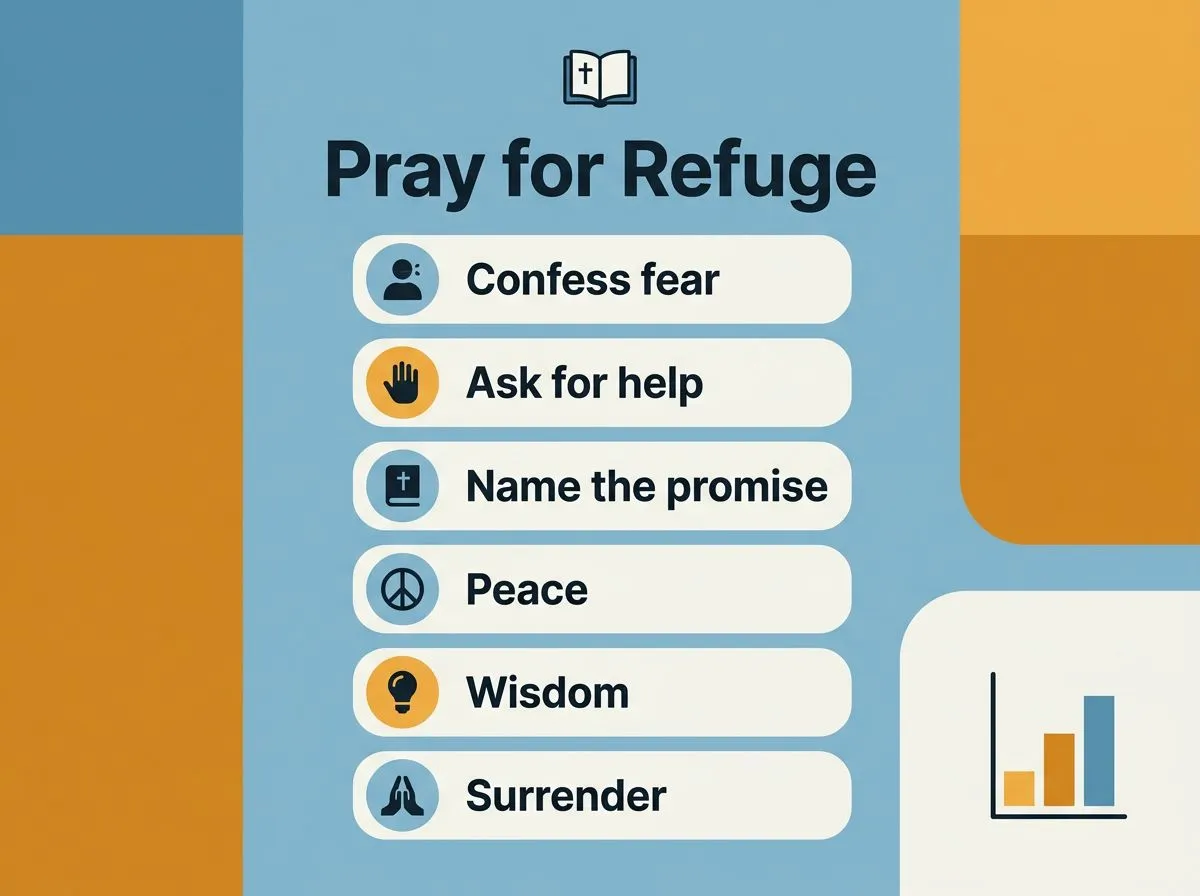
You can pray with simple honesty and ask God to be the shelter you need right now. Pray for peace when your mind races, for wisdom when decisions feel heavy, and for endurance when the waiting drags on.
A prayer like that does not need polished language. It only needs faith that God hears, knows, and is good, even before the answer comes.
If you want a pattern, keep it brief: confess your fear, ask for help, name the promise you are holding onto, and end by surrendering the outcome to God. That keeps prayer rooted in Scripture instead of drifting into vague wishing.
The refuge God provides is not a promise that nothing will touch you. It is a promise that you are not alone in what does touch you, and that changes how you suffer, how you choose, and how you keep going.
Frequently asked questions
What if I believe in God but still feel afraid?
That does not mean your faith has failed. The Bible shows believers who trusted God while still feeling pressure, weakness, and uncertainty, and Psalm 46 calls Him a present help in trouble. Bring the fear to God in prayer, then keep holding to what He has said even before your emotions settle.
How do I know if a Bible promise applies to me today?
Read the promise in its full passage, then ask who it was first given to and whether it reflects a wider truth about God’s character. Some promises are tied to a specific situation, while others speak more broadly, like Psalm 46 and Hebrews 11:6, which describe God as active, near, and worthy of trust.
Can prayer strengthen faith in God?
Yes. Prayer strengthens faith because it keeps turning your attention back to God instead of your own strength, and honest prayer is often where trust becomes steadier. The article also shows that praying God’s Word, like asking Him to be your help today, helps faith stay anchored in what He has already revealed.
Is faith in God the same as positive thinking?
No. Biblical faith is confidence in God’s character, His Word, and His promises, not just a hopeful attitude. Positive thinking depends on mindset alone, but faith rests on who God is, what He has said, and the reality that He is a refuge when life is still uncertain.


A Letter From Jesus to You
Maybe you arrived here carrying thoughts that no one else knows about. Maybe everything seems fine on the outside, but inside, a battle is taking place. There…

Jesus Has a Word for Your Heart Today
Maybe you arrived here carrying thoughts that no one else knows about. It could be a concern about your family, an important decision, a financial struggle, or…

7 Promises From God for Difficult Times
Seven promises to pray in hard seasons, with clear context so you can trust God’s Word without misreading it.

A Practical Guide to Reading the Gospels
Read one Gospel at a time, keep sessions short, and notice each writer’s purpose so Jesus’ words stay clear.