
Daniel: Learning How to Get Through Difficult Times
If you’re walking through a hard season, the Book of Daniel shows you how to stay faithful when pressure is real, the outcome is unclear, and public courage comes with a cost. Daniel is a story of exile, prayer, wisdom, and God’s rule over empires, and it speaks straight to Christians who need steadiness, not slogans. This article focuses on Daniel’s main message, its historical setting, and the way Christians commonly read its prophecies today.
Key takeaways
- Daniel’s first 6 chapters show 3 public tests of faith, from food to the furnace to the lions’ den.
- Chapters 7 to 12 shift into visions, so readers should expect symbolism, not a simple timeline.
- The book is set in Babylonian exile, which explains why identity and loyalty are central themes.
- Daniel teaches one clear decision for hard seasons: stay faithful even when you cannot control the outcome.
- Christians usually read Daniel as a book about God’s rule over kingdoms, not just future events.
What the Book of Daniel Is About
The Book of Daniel begins with faith in exile, then moves into visions of God’s coming kingdom. The opening six chapters tell the narrative stories of Daniel and his friends in Babylon, while chapters 7 through 12 shift into apocalyptic visions that show God’s control over future kingdoms and the end of history Everyday Scripture.
That split matters, because the book doesn’t open with abstract prophecy. It starts with a young Jewish captive, taken into the royal court of Babylon, who has to live under pressure without giving up his identity. Daniel, Shadrach, Meshach, and Abednego are trained in Babylonian language and culture, yet they stay loyal to the Lord Biola University.
The best-known scenes come from that first half. Daniel and his friends face the temptation to be reshaped by Babylon, the fiery furnace tests public faith, Daniel’s night in the lions’ den shows quiet trust under threat, Nebuchadnezzar’s dreams expose the limits of human power, and Belshazzar’s judgment shows that arrogance doesn’t stay hidden forever. Those stories aren’t random highlights, they are the book’s way of showing what faithful witness looks like under empire BibleProject.
The historical backdrop is Jerusalem after Babylon’s assault and the deportation of Judean captives, with Daniel later serving under Cyrus as well as Babylonian rulers. That setting explains why the book keeps returning to identity, pressure, and loyalty, because exile isn’t just geography, it is a test of who you believe God is when your surroundings no longer feel like home Bibles.net.
Daniel’s language pattern also helps organize the book. Chapters 1 and 8 through 12 are written in Hebrew, while chapters 2 through 7 are in Aramaic, which marks the book’s movement from Israel’s immediate story into a wider, international horizon. That shift supports the book’s message: God is not only the God of one land or one people, but the ruler over every kingdom Everyday Scripture.
How Daniel’s Hardships Teach Faithfulness
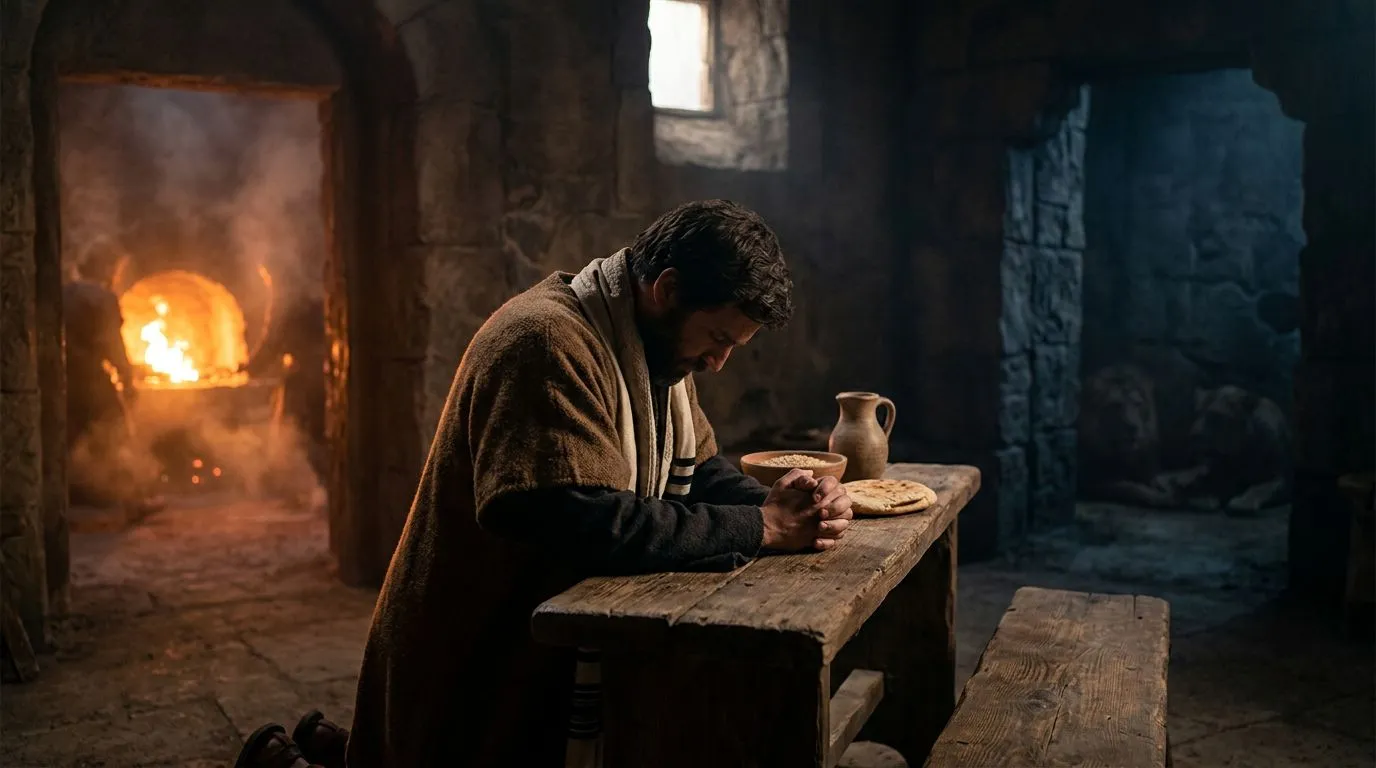
- Daniel 1 shows quiet resistance, because Daniel and his friends do not let Babylon redefine them, yet they still serve with wisdom and respect.
- The fiery furnace and Daniel in the lions’ den show that God can protect His people when danger is real, but the book never asks you to pretend danger is imaginary.
- Nebuchadnezzar and Belshazzar show the danger of pride, because power, status, and wealth become dangerous when they replace humility before God.
- Daniel 7 through 12 shows that unanswered tension belongs to faith, and that waiting, praying, and staying steady are sometimes part of obedience.
- The book gives Christians a picture of courage that is visible in speech, habits, prayer, and public decisions under pressure.
Daniel 1 is especially practical because it shows resistance without belligerence. Daniel doesn’t scream, posture, or disappear from public life. He chooses faithfulness in food, habits, and allegiance, and he does it while still working inside the system. That is often the hardest kind of courage for believers, because it asks for conviction without contempt.
The furnace and the lions’ den teach a different but related lesson. God’s people are not promised easy circumstances, and the book doesn’t flatten danger into a motivational line. The point is deeper: even when the outcome is not safe by human standards, God remains able to preserve, deliver, and vindicate His people in ways no empire can control Bible Basics.
Nebuchadnezzar and Belshazzar are warnings to readers who think control is the same as security. Both kings have power, both receive divine warning, and both are forced to see that human authority is limited. Daniel doesn’t flatter them, and that matters for believers today because the book shows how quickly pride turns public success into spiritual ruin BibleProject.
The visions in chapters 7 through 12 are harder, and that is part of their lesson. Daniel does not get every detail explained neatly, and neither do readers.
The book trains you to live with partial understanding without giving up prayer or obedience, which is a very real form of faithfulness for anyone waiting on God in a confusing season.
In practice, that can look like keeping your regular prayer time, continuing to do what is right at work, and refusing to panic when you cannot map out the next step.
The Historical Setting Behind Daniel’s Story
| Setting or ruler | What Daniel is experiencing | Why it matters for interpretation | Sources and references |
|---|---|---|---|
| Babylon under Nebuchadnezzar | Exile, training, court life, and pressure to adopt a new identity | Shows why Daniel’s early chapters are about loyalty to God while living inside a foreign system | Book of Daniel, Bible cross references to Jeremiah and Ezekiel |
| The royal court and its officials | Competition, danger, and the temptation to compromise for advancement | Helps readers see that Daniel’s courage is not abstract, it is tested in daily public life | Book of Daniel, historical background from Scripture |
| Belshazzar’s feast and judgment | A ruler acting with arrogance while God exposes false security | Makes the handwriting on the wall a warning about pride and accountability | Daniel 5, Bible cross references to Proverbs |
| Persian rule and continued exile | God’s people still live under empire, but God’s rule is higher than any kingdom | Supports the book’s message that political change does not cancel God’s faithfulness | Daniel 6, Bible cross references to Jeremiah 29 |
The setting is not background noise, it is part of the message. Daniel is living far from Jerusalem, first under Nebuchadnezzar and later under Cyrus, and the book keeps asking what it looks like to remain faithful when the center of power is not where God’s people belong. That is why the royal court matters so much: every meal, name, promotion, and public decision becomes a spiritual test Bibles.net.
The Babylonian and Persian backdrop also keeps the book from being read as a simple triumph story. Daniel rises in influence, but he never becomes the hero because of ambition or strategy alone. The setting shows that his standing comes from God’s favor and from the consistency of his witness under pressure, not from fitting in with the strongest people in the room.
How Christians Read Daniel Today
Christians commonly read Daniel as both historical narrative and prophecy, which means the book speaks to its own time and also points beyond it. Daniel 2 and the later visions develop kingdom imagery that moves from human empires toward God’s final rule over history, so the book is not only about what happened then, it also teaches how to trust God now Yale Online.
Daniel also connects straight to the New Testament. In Matthew 24 and Mark 13, Jesus refers to Daniel’s language about the “abomination that causes desolation,” and many Christians also see Daniel’s “Son of Man” theme as pointing to Christ’s authority. That connection matters because it shows Daniel isn’t isolated prophecy sitting on a shelf, but part of the Bible’s larger story of rescue and kingdom Biola University.
Careful reading keeps apocalyptic language in its proper place. Daniel uses symbols, beasts, images, and visions to reveal God’s sovereignty, but that doesn’t mean every image has to be pressed into a one-to-one modern prediction. Readers do better when they let Scripture interpret Scripture, especially by reading Daniel alongside Jeremiah 29, Ezekiel, Matthew 24, Mark 13, and Revelation, instead of trying to make every symbol do more than the text itself claims Life, Hope & Truth.
That approach keeps the book spiritually useful instead of speculative. Daniel gives Christians hope because God is sovereign in exile, faithful under pressure, and worthy of trust when the future feels unclear. It also keeps us humble, because the book’s visions remind us that God’s timeline is bigger than our need for instant answers Everyday Scripture.
What Daniel Means for You in Difficult Times
Daniel means you don’t need to collapse spiritually just because your circumstances are hard. The book honors obedience that looks small, prayer that keeps going in public, and trust that stays steady when you can’t see the ending. That kind of faith isn’t dramatic in the moment, but it’s the kind that lasts.

The clearest next step is to read Daniel as a whole, not only the famous scenes. Start with chapters 1 through 6 to see the pressure of exile, then move into chapters 7 through 12 to see how God speaks into uncertainty. If you read it slowly, Daniel becomes less like a distant prophecy book and more like a companion for perseverance.
Next Steps
- Read Daniel 1 through 6 in one sitting so you can feel the pattern of pressure, prayer, and courage.
- Then read Daniel 7 through 12 more slowly, noting where Daniel receives visions but still has to wait.
- Compare Daniel with Jeremiah 29, Ezekiel, Matthew 24, Mark 13, and Revelation to see how Scripture interprets Scripture.
- Pray one honest prayer about your current hard season, asking God for steady faith rather than quick explanations.
- Choose one concrete act of obedience this week, especially in speech, habits, or public witness.
Frequently asked questions
What is the shortest way to understand Daniel’s message?
Daniel shows that God is sovereign in exile, faithful under pressure, and still at work when rulers look powerful and circumstances feel unstable. In the book’s own shape, that means the stories of chapters 1 through 6 and the visions in chapters 7 through 12 both point to the same truth: earthly empires do not have the final word.
Why does Daniel switch between Hebrew and Aramaic?
The language shift reflects the book’s structure and audience, with Aramaic emphasizing the international court sections and Hebrew framing parts of the vision material. In practical terms, it helps mark the move from Israel’s immediate story to a wider, empire-level message about God’s rule over every kingdom.
How should a Christian read Daniel’s prophecies without forcing every detail?
Read them with humility, notice the historical setting, compare Scripture with Scripture, and let clearer passages in the Bible shape the harder symbols. That keeps you from turning every beast or image into a modern code and helps the book stay spiritually useful instead of speculative.
What Bible passages pair well with Daniel for encouragement?
Matthew 24, Mark 13, Jeremiah 29, Ezekiel 14, and Revelation all help readers see Daniel’s themes of exile, endurance, and God’s coming kingdom. Jeremiah 29 is especially helpful for exile language, while Matthew 24 and Mark 13 echo Daniel’s prophetic imagery in Jesus’ teaching.


A Letter From Jesus to You
Maybe you arrived here carrying thoughts that no one else knows about. Maybe everything seems fine on the outside, but inside, a battle is taking place. There…

Jesus Has a Word for Your Heart Today
Maybe you arrived here carrying thoughts that no one else knows about. It could be a concern about your family, an important decision, a financial struggle, or…

7 Promises From God for Difficult Times
Seven promises to pray in hard seasons, with clear context so you can trust God’s Word without misreading it.

A Practical Guide to Reading the Gospels
Read one Gospel at a time, keep sessions short, and notice each writer’s purpose so Jesus’ words stay clear.