
What Does the Bible Say About Anxiety?
If anxiety has been crowding your thoughts, the Bible speaks to it directly: pray, cast your cares on God, and receive a peace the world can’t produce. The clearest starting points are Philippians 4:6-7, 1 Peter 5:6-7, John 14:27, Psalm 34:4, and Proverbs 12:25.
Key takeaways
- Philippians 4:6-7 pairs prayer with thanksgiving, then points to God’s peace guarding your heart and mind.
- 1 Peter 5:6-7 tells you to cast all your anxiety on God, which makes it a strong choice when the load feels too heavy to carry alone.
- John 14:27 is Jesus’ own peace promise, so it fits fear about what comes next, not just general stress.
- Psalm 34:4 and Proverbs 12:25 are useful when you need deliverance from fear or a kind word that eases a heavy heart.
The Bible verses people turn to first when anxiety feels heavy

- Philippians 4:6-7 is the clearest prayer-and-peace passage for anxiety, which is why it is quoted so often in Christian encouragement pieces and memory plans like Bible Memory Goal.
- 1 Peter 5:6-7 tells you to cast all your anxiety on God, making it the verse people reach for when worry feels like a load you cannot carry alone.
- John 14:27 is Jesus’ own promise of peace to His disciples, and it speaks especially to hearts that feel troubled or afraid.
- Psalm 34:4 and Proverbs 12:25 are wisdom-and-worship passages, one showing deliverance from fear and the other showing how a kind word can lighten a heavy heart.
What those passages actually say in context
Philippians 4:6-7 comes from Paul’s letter to the Philippians, where he pairs prayer with thanksgiving and then points to God’s peace guarding both heart and mind. That matters because the passage isn’t a vague nudge to calm down, it’s a direct invitation to bring your requests to God and trust His peace to stand watch over your inner life. JW.org
1 Peter 5:6-7 appears inside Peter’s call for believers to humble themselves under God’s mighty hand. The anxiety doesn’t vanish because life suddenly gets easy, it’s placed into God’s care because He cares for you, and that turns worry into trust instead of self-protection. Logos
John 14:27 comes from Jesus’ farewell words before His departure, so the peace He gives is spoken right into fear, loss, and uncertainty. He doesn’t offer the kind of peace that depends on everything going smoothly; He offers His own peace, which is why troubled hearts are told not to be afraid. BibleStudyTools
Psalm 34:4 and Proverbs 12:25 use worship and wisdom to show what fear looks like in real life. In Psalm 34:4, the psalmist seeks the Lord and is delivered from fear, and in Proverbs 12:25, a kind word becomes real relief for a heavy heart. These verses matter because they show that God meets anxiety with His presence and with His people’s gentle speech. Billy Graham Evangelistic Association
How Bible verses for anxiety connect to prayer and renewed trust
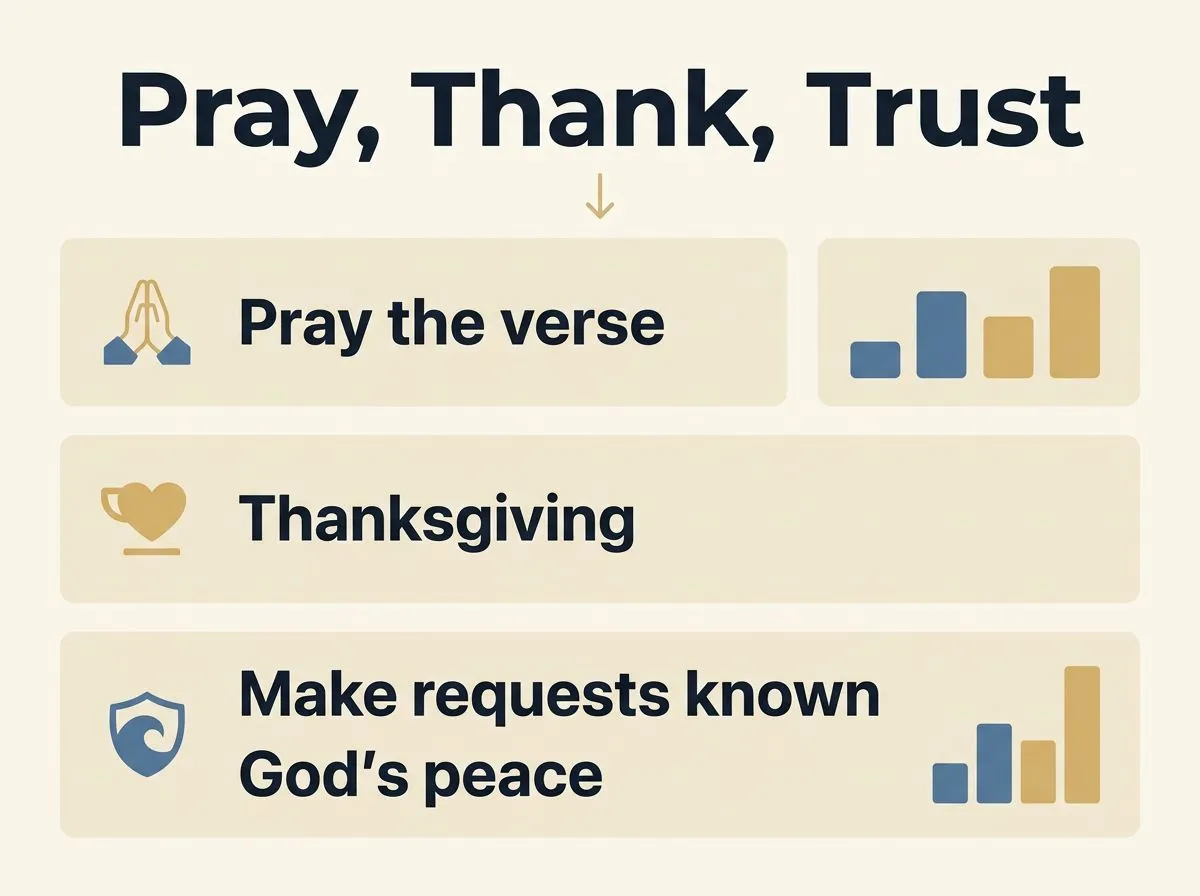
- Pray the verse back to God in your own words, while keeping its meaning intact, so the passage becomes a prayer instead of a slogan.
- Add thanksgiving before your requests, especially with Philippians 4:6-7, because gratitude keeps anxiety from narrowing your whole prayer down to fear alone.
- Choose one promise for the moment, then repeat it when fear rises again, so your mind has one truth to return to instead of chasing every worried thought.
- Use the verse as a short daily prayer line or memory verse, and keep it visible in the places where anxiety tends to spike, like a phone note, a card in your Bible, or a mirror.
Which verse fits which kind of anxious moment
| Verse or passage | Best for | Key phrase | Immediate action it invites | Why it helps spiritually |
|---|---|---|---|---|
| Philippians 4:6-7 | Racing thoughts and constant worrying | Pray, with thanksgiving, make your requests known to God | Turn the worry into a spoken prayer and name what you need | It redirects the mind from spiraling to trust and receives God’s guarding peace |
| 1 Peter 5:6-7 | Feeling burdened, exposed, or overwhelmed | Cast all your anxieties on him | Hand the whole load over to God instead of carrying it alone | It frames anxiety as something God can hold because He cares for you |
| John 14:27 | Trouble, fear, or dread about what is coming next | My peace I give to you | Receive Jesus’ peace as a gift instead of waiting for circumstances to settle | It anchors peace in Christ, not in external stability |
| Psalm 34:4 | Fear that needs relief and reassurance | I sought the Lord | Seek God directly in prayer and worship | It shows fear answered by God’s hearing and deliverance |
| Proverbs 12:25 | A heavy heart that needs gentle encouragement | A kind word cheers it up | Speak or receive a truthful, kind word today | It reminds you that God often comforts through wise, tender speech |
If you want to use these verses well, start with the one that fits your current struggle instead of trying to memorize all five at once. A simple Bible Memory Goal can be one verse for one week, especially if you write it where you’ll see it before the day gets noisy.
If your anxiety is persistent, these passages can still steady you, but they’re not a substitute for wise help when you need it. Christian resources such as First 15, Logos, Valley View Church, and BibleStudyTools can give you more reading and prayer help, while a trusted pastor, counselor, or doctor may be the right next step if fear is disrupting sleep, work, or daily functioning.
The biblical answer to anxiety isn’t denial, and it isn’t pretending you’re fine. It’s bringing what weighs on you into the presence of God, speaking His promises aloud, and letting prayer become the place where fear stops being in charge.
Frequently asked questions
Can I pray Bible verses out loud when I feel anxious?
Yes. Praying Scripture out loud can help you slow down, focus your thoughts, and turn the verse into a personal request to God. It also works well with Philippians 4:6-7, since that passage specifically pairs prayer with thanksgiving and asking God for what you need.
Which Bible verse is best for panic or sudden fear?
Philippians 4:6-7 and Psalm 34:4 are two of the most commonly used passages because they pair fear with prayer, peace, and deliverance. If your fear feels more like an overwhelming burden, 1 Peter 5:6-7 is also a strong choice because it tells you to cast your anxiety on God.
Should I read the whole chapter around an anxiety verse?
If you can, yes. The surrounding verses give the passage its tone and show what the writer or speaker was addressing, which matters especially for Philippians 4:6-7 and John 14:27. Reading the whole context helps you see whether the verse is speaking to fear, burden, trouble, or a heavy heart.
Can these verses help if my anxiety is ongoing?
They can offer steady spiritual support, especially when you return to them daily, but ongoing anxiety may also need wise support from pastors, counselors, or medical professionals. The article also suggests using one verse for one week and keeping it visible, so the truth is easier to return to when fear keeps coming back.


A Letter From Jesus to You
Maybe you arrived here carrying thoughts that no one else knows about. Maybe everything seems fine on the outside, but inside, a battle is taking place. There…

Jesus Has a Word for Your Heart Today
Maybe you arrived here carrying thoughts that no one else knows about. It could be a concern about your family, an important decision, a financial struggle, or…

7 Promises From God for Difficult Times
Seven promises to pray in hard seasons, with clear context so you can trust God’s Word without misreading it.

A Practical Guide to Reading the Gospels
Read one Gospel at a time, keep sessions short, and notice each writer’s purpose so Jesus’ words stay clear.