
8 Biblical Examples of True Forgiveness
What does the Bible mean by true forgiveness? It means releasing a person’s debt before God instead of holding on to revenge, while still telling the truth about what happened. Scripture also shows that forgiveness, repentance, and reconciliation are related but not identical, so you can forgive without pretending trust is already restored.
Key takeaways
- Matthew 18:21-22 shows forgiveness has no set limit, so you do not stop at a certain number of offenses.
- Luke 17:3-4 ties forgiveness to repentance, which means restored trust may still take time.
- Joseph in Genesis 50:17-21 forgave by refusing revenge, even after real harm had been done.
- Psalm 103:10-12 shows God removes sin far beyond human record-keeping, giving you a model for mercy.
- Ephesians 4:32 and Colossians 3:13 call believers to forgive as God forgave them, in ordinary church life.
What the Bible Means by Forgiveness
Biblical forgiveness is a deliberate choice to cancel the debt of an offense and leave justice in God’s hands. In Matthew 6:14-15, Jesus connects our forgiveness of others to our own standing before the Father, which makes forgiveness a serious part of discipleship, not something you wait to feel. In a real conflict that is still unresolved, forgiveness can mean praying for the person, refusing retaliation, and leaving the final judgment with God while still keeping wise boundaries. BibleProject
Colossians 3:13 makes the same point in everyday Christian life: “bear with one another and, if one has a complaint against another, forgive each other.” In other words, forgiveness belongs in the ordinary mess of church relationships, family conflict, and personal offense. It’s the opposite of keeping a private ledger and waiting for the perfect apology before you obey God.
Repentance is the offender turning from sin, forgiveness is the injured person releasing vengeance, and reconciliation is restored relationship when truth and trust can actually be rebuilt. A person can repent and still need time before trust returns, and you can forgive someone even if reconciliation is unsafe or impossible right now. GotQuestions.org
8 Biblical Examples of True Forgiveness

- Matthew 6:14-15, Jesus speaks in the Sermon on the Mount. The setting is prayer, and the point is direct: people who receive mercy from God are called to extend mercy to others. This passage emphasizes both God’s forgiveness and forgiving others.
- Matthew 18:21-22, Jesus answers Peter’s question about how often to forgive a brother who sins against you. Jesus says not seven times, but seventy-seven times, showing that forgiveness is not a one-time limit you reach and then stop. This passage emphasizes forgiving others with no small tally.
- Luke 17:3-4, Jesus tells the disciples to rebuke a sinning brother and forgive him if he repents, even if he sins and repents seven times in one day. The context matters because Jesus holds repentance and forgiveness together without confusing them. This passage emphasizes forgiving others, with repentance explicitly in view.
- Colossians 3:13, Paul instructs believers to bear with one another and forgive as the Lord forgave them. The situation is ordinary church life, where offended people still have to live, serve, and worship together. This passage emphasizes both God’s forgiveness and forgiveness among believers.
- Ephesians 4:32, Paul tells Christians to be kind, tenderhearted, and forgiving, just as God in Christ forgave them. The verse places forgiveness inside a larger pattern of kindness rather than treating it as a cold obligation. This passage emphasizes forgiving others and points back to God’s forgiveness.
- Genesis 50:17-21, Joseph’s brothers fear punishment after Jacob dies, but Joseph says their evil meant harm while God meant it for good. He reassures them and provides for them instead of exacting revenge. This passage shows forgiveness by example and emphasizes releasing vengeance.
- 2 Samuel 12:13, David says, “I have sinned against the LORD,” after Nathan confronts him about Bathsheba and Uriah. David’s repentance is immediate, and God’s mercy follows, showing that forgiveness and repentance belong together in serious moral failure. This passage emphasizes God’s forgiveness and repentance.
- Psalm 103:10-12, the psalmist praises the Lord for not dealing with us according to our sins and for removing transgressions as far as east is from west. The passage is worship, not a private counseling note, and it shows how God Himself pictures forgiveness. This passage emphasizes God’s forgiveness.
How These Passages Fit Together
| Passage | Who speaks or acts | What happened | What forgiveness means here | Repentance or reconciliation in view |
|---|---|---|---|---|
| Matthew 6:14-15 | Jesus speaks | The Sermon on the Mount links forgiving others with the Father’s mercy | Forgiveness is an obedient response to received mercy | Repentance is not the focus, reconciliation is not the focus |
| Matthew 18:21-22 | Jesus speaks | Peter asks for a limit on forgiving a brother | Forgiveness has no small numerical ceiling | Repentance is not stated, reconciliation is secondary to the command |
| Luke 17:3-4 | Jesus speaks | A brother sins, is rebuked, and then repents | Forgiveness follows repentance and can be repeated | Both repentance and restored relationship are in view |
| Colossians 3:13 | Paul speaks | Believers must live together with faults and complaints | Forgiveness is part of Christian community life | Reconciliation may be worked toward, but the text centers on forgiveness |
| Ephesians 4:32 | Paul speaks | Christians are told to act with kindness and forgiveness | Forgiveness mirrors God’s grace in Christ | Reconciliation is possible later, but not named here |
| Genesis 50:17-21 | Joseph acts | His brothers fear retaliation after Jacob’s death | Forgiveness means refusing revenge and preserving provision | Repentance is not the main point, reconciliation is implied by restored peace |
| 2 Samuel 12:13 | Nathan speaks to David, David confesses | David is confronted and admits sin against the LORD | Forgiveness follows confession and divine mercy | Repentance is central, reconciliation with God is the focus |
| Psalm 103:10-12 | The psalmist praises God | God is celebrated for removing sin completely | Forgiveness is described as God’s compassionate act | Repentance is not the focus, reconciliation is God-centered |
How to Apply These Verses in Prayer and Daily Life
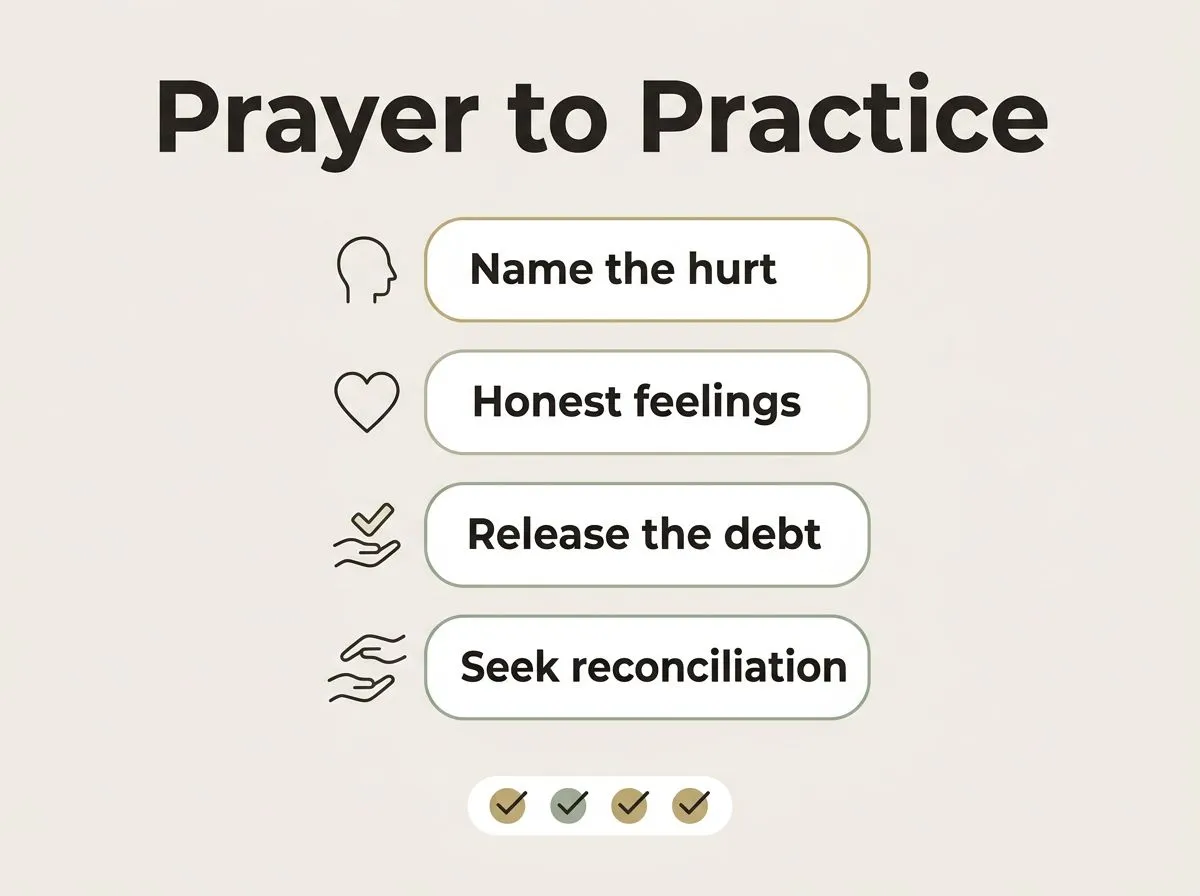
- Name the hurt plainly in prayer. Say who hurt you, what happened, and what feeling is strongest, whether anger, grief, fear, or confusion. The goal is honesty before God, because vague prayers usually hide the real wound.
- Read one passage slowly and turn it into your words. For example, after Matthew 18:21-22, ask God to help you forgive without keeping score. After Ephesians 4:32, ask Him to make you kind when your instincts want to shut down.
- Release the demand for payback. That means you stop plotting revenge, rehearsing retaliation, or using the offense as a weapon in every future argument. Forgiveness does not erase memory, but it does hand justice back to God.
- Set wise boundaries when the other person is unsafe, absent, or unwilling to repent. You can forgive and still refuse access to your home, your money, your body, or your children. Scripture never asks you to call danger safe.
- End with a short prayer of obedience. Ask God for mercy, peace, and a clean heart, then choose one concrete act that matches the prayer, such as a calm text, a truthful conversation, or simply letting the matter rest in God’s hands.
A simple verification checklist can help you tell whether you are moving in biblical forgiveness or just talking about it. Ask whether your response reflects Matthew 6:14-15 by releasing revenge, Colossians 3:13 by bearing with the offender, and repentance and reconciliation as separate steps instead of one forced outcome. Use it as a quiet self-check, not as a performance score.
- You have named the offense to God in prayer, and the prayer includes the actual person and event, not just general frustration.
- You have read one forgiveness passage from the list and can say what it asks of you in one sentence.
- You are not planning revenge, and your next action does not aim to punish the other person.
- If repentance is still missing, you have not confused forgiveness with automatic trust or immediate reconciliation.
- Your final prayer asks God for mercy and obedience, and it ends with a concrete next step you can carry out today.
Frequently asked questions
What is the most direct Bible verse about forgiving others?
Matthew 6:14-15 is one of the clearest verses because Jesus directly links forgiving others with the Father’s mercy. Ephesians 4:32 is also strong, since it tells believers to be kind and forgiving just as God forgave them in Christ. Both passages make forgiveness a practical act of discipleship, not a vague ideal.
Is forgiveness the same as reconciliation in the Bible?
No. The Bible treats forgiveness and reconciliation as related but distinct, so you can forgive without pretending trust is already restored. Reconciliation depends on truth, repentance, and whether a safe, restored relationship is actually possible.
Does the Bible require me to forgive someone who has not apologized?
Yes, the call to forgive is still there, even when an apology has not come. The Bible also makes clear that forgiveness is not the same as reconciliation, so you can release the debt before God while recognizing that trust has not been rebuilt and may not be safe to rebuild yet.
How many times does Jesus say to forgive?
In Matthew 18:21-22, Jesus tells Peter to forgive “seventy-seven times,” showing that forgiveness is not meant to be counted like a quota. The point is that a believer should not keep a private tally and then stop forgiving once the number feels high enough.


A Letter From Jesus to You
Maybe you arrived here carrying thoughts that no one else knows about. Maybe everything seems fine on the outside, but inside, a battle is taking place. There…

Jesus Has a Word for Your Heart Today
Maybe you arrived here carrying thoughts that no one else knows about. It could be a concern about your family, an important decision, a financial struggle, or…

7 Promises From God for Difficult Times
Seven promises to pray in hard seasons, with clear context so you can trust God’s Word without misreading it.

A Practical Guide to Reading the Gospels
Read one Gospel at a time, keep sessions short, and notice each writer’s purpose so Jesus’ words stay clear.