
Who Is Jesus? Understanding His Life, Mission, and Message
Jesus is the Son of God, the Messiah, and the Son of Man, and the Bible presents Him as far more than a moral teacher or prophet. In the Gospels, He speaks with God’s authority, fulfills God’s promises, and calls you to respond with faith, repentance, and trust.
Key takeaways
- Jesus is described with 3 major titles, Son of God, Messiah, and Son of Man, and each one points to His authority.
- The four Gospels give 4 distinct views of one life, so you do not need a perfect timeline to trust their message.
- Jesus’ mission centers on 2 urgent calls, repent and believe, then follow Him in daily obedience.
- Christian salvation is tied to 1 decisive event, Jesus’ death and resurrection, which Christians see as the basis for forgiveness and reconciliation.
- The final question is personal: you must decide whether Jesus is only a figure to study or Lord to trust.
This article is about Jesus of the Bible, not later religious inventions or debates about other figures with similar names. If you want a clear, Scripture-based answer to who Jesus is, along with His life, mission, and saving work, the Gospels are where you start.
Who Jesus Is According to the Bible
Jesus is the Son of God, the Messiah, and the Son of Man, and those titles together reveal His unique identity and authority. The New Testament does not leave Him as only a wise teacher. It presents Him as the one who reveals the Father and carries out God’s rescue plan.

In John 10:30, Jesus says, “I and the Father are one,” and in John 8:58, He says, “before Abraham was, I am.” Those are not vague spiritual sayings. His listeners understood that He was claiming a status and identity that belonged to God, and that is why His words caused such a strong reaction.
The Gospels use different titles to show different sides of the same person. “Son of God” points to His close relationship with the Father, “Messiah” points to the promised King and deliverer, and “Son of Man” points to both His humanity and His authority to act in God’s name. Crossway’s discussion of these titles reflects the way the New Testament presents Jesus: fully human, fully invested with divine authority, and central to the Bible’s story Crossway.
This mattered to Jesus’ first listeners because it forced a decision. If Jesus really spoke for God, then His words could not be treated as optional advice. That question still stands for you today. If His claims are true, then His authority is not just something to admire, it is something to obey.
The Life of Jesus in the Gospels
- Jesus was born in Bethlehem and grew up in Nazareth, in a humble setting that showed God’s care for ordinary people.
- He began public ministry by teaching, healing, performing miracles, and calling disciples to follow Him.
- He challenged religious leaders, and that opposition grew as His message became more direct.
- He was crucified, buried, and raised from the dead, with the resurrection standing at the center of the Christian message.
- Matthew, Mark, Luke, and John tell the same life of Jesus with different emphases, details, and audiences in view.
- Matthew often highlights fulfillment of Scripture, as in “this was to fulfill” themes and the Sermon on the Mount
- Mark moves quickly through action, beginning with John the Baptist and Jesus’ opening call in Mark 1
- Luke gives special attention to the poor, outsiders, and historical setting, including the birth narratives and the road to Emmaus
- and John focuses on Jesus’ identity and signs, opening with “the Word was God” and key miracles such as Cana
The four Gospels are not four competing stories. They are four faithful complementary windows into one life, and their differences help you see Jesus more fully, not less.
Christianity.org.uk notes that the Gospels are not identical and do not present the events in exactly the same order, which is why a precise timeline has limits Christianity.org.uk. That matters practically because you do not have to force every detail into one strict sequence to trust the message. The point of the Gospels is not a spreadsheet, it is witness.
Jesus’ Mission and Message
Jesus came to announce the kingdom of God and to call people to repent and believe. His message was urgent, personal, and hopeful, God’s reign was breaking in, forgiveness was available, and people were being invited into a new way of life under God’s rule. Mark 1:14-15 captures that mission clearly: “The time is fulfilled, and the kingdom of God is at hand; repent and believe in the gospel.”
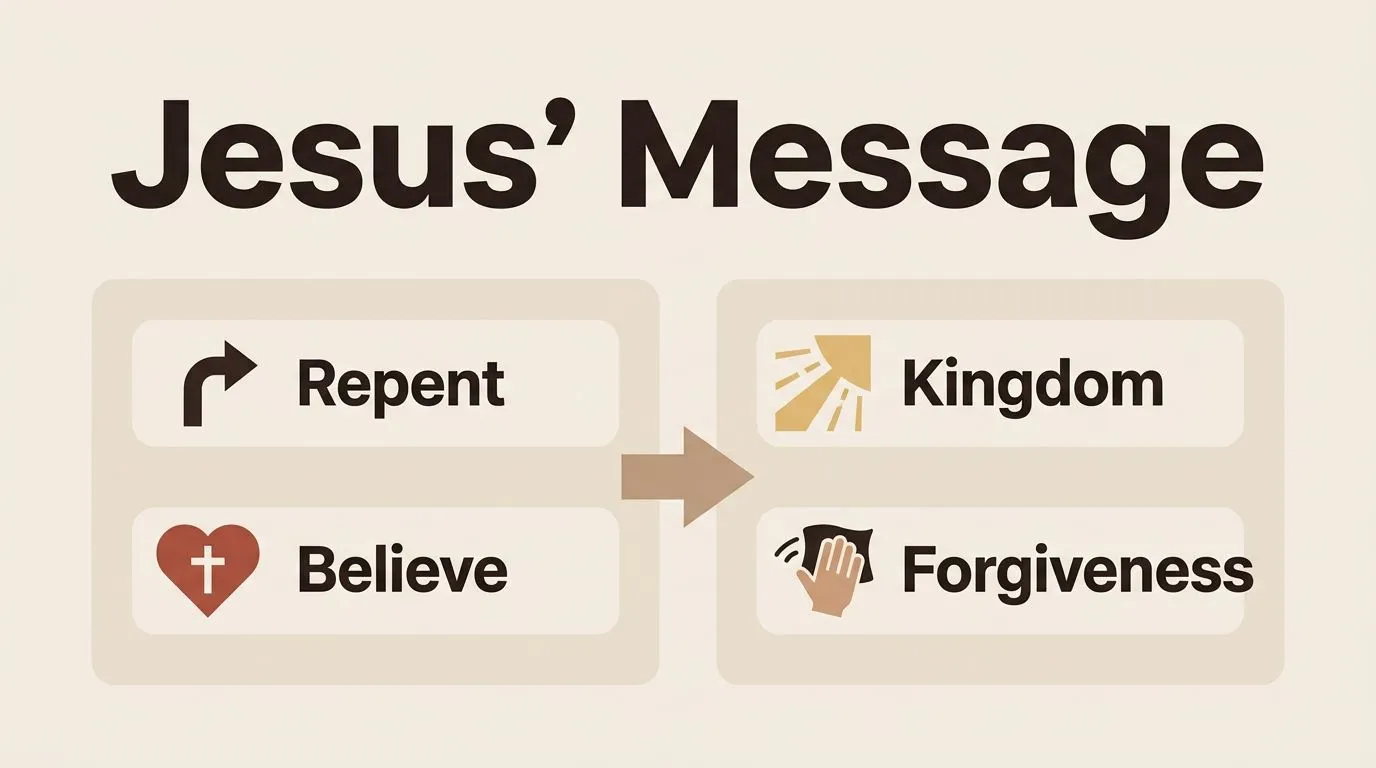
That message centered on faith, mercy, humility, and obedience. Jesus taught people to love God, love neighbor, forgive others, pray honestly, and live with a kingdom-shaped heart. He did not only give information about God. He called people to turn around and follow Him.
Matthew 28:18-20 pulls Jesus’ mission into a clear command for His followers. After His resurrection, Jesus says that all authority in heaven and on earth has been given to Him, then sends His disciples to make disciples, baptize them, and teach them to obey everything He commanded. The Asbury Journal’s work on Matthew’s mission theme highlights that this Great Commission belongs in a resurrection setting, which is why it carries both authority and hope Asbury Journal.
That changes how discipleship works. Following Jesus is not only agreeing with His teachings, it is learning a new pattern of life under His authority. Desiring God similarly emphasizes that Jesus promises His presence as power for the mission He gives, so Christian obedience is never detached from His help Desiring God.
Why Christians Say Jesus Brings Salvation and Reconciliation
| What Jesus did | What it means for sinners | How Christians describe the result | Key Scripture idea or passage |
|---|---|---|---|
| He lived without sin, went to the cross, died for sinners, and rose again. | Sin is serious, forgiveness is needed, and people cannot repair the break with God on their own. | Salvation, reconciliation with God, new life, and the hope of resurrection. | The Gospel accounts of the cross and resurrection, along with apostolic preaching such as Acts 9:2 and 2 Corinthians 5:17. |
What Jesus did matters because the Bible treats sin as a real rupture, not a minor flaw. People do not save themselves by effort, sincerity, or religious activity. Christians say Jesus brings reconciliation because His death deals with sin and His resurrection shows that death does not get the final word.
That is why early believers spoke of following “the Way,” and Acts 9:2 shows that this movement had a name before Christianity became a formal label. Their confidence was not built on self-improvement. It was built on the risen Jesus and the new life that follows from Him.
2 Corinthians 5:17 gives the practical result in simple terms: if anyone is in Christ, there is new creation. That means Jesus does not merely forgive and leave you unchanged. He begins a real work of renewal that affects your identity, your choices, and your hope.
What You Still Need to Decide About Jesus
You still have to decide whether you will treat Jesus as a teacher to admire, a Savior to trust, or a Lord to follow. That decision turns on whether you believe His claims in John, His authority in Matthew 28:18-20, and His resurrection message are true.
You also have to decide how you will read the Gospels. For a first reading, start with Mark if you want the shortest, fastest overview of Jesus’ ministry, or start with John if you want a clear focus on who Jesus is. Then read Matthew and Luke for fuller context and distinct details. The best choice depends on whether you need a broad introduction, a theological focus, or a fuller narrative sweep.
Finally, you have to decide what response fits your life right now. If you are a seeker, begin with Mark 1 and read it slowly for a week, asking whether Jesus’ words sound like truth. If you are already a believer, the next step is simple obedience, because Jesus’ message always moves from belief into discipleship.
Frequently asked questions
Did Jesus directly say He was God?
Yes, Christians point to passages like John 10:30 and John 8:58 as direct claims that place Jesus in unique unity with God, not merely in the role of a moral teacher. In the article, those words are treated as statements about His divine identity and authority, which is why His listeners reacted so strongly.
Why do the four Gospels tell Jesus’ story differently?
They tell the same life story with different emphases, details, and audiences in view, so the accounts complement one another instead of reading like identical transcripts. Matthew highlights fulfillment of Scripture, Mark moves quickly, Luke gives special attention to the poor and outsiders, and John focuses on Jesus’ identity and signs.
What does it mean to call Jesus the Messiah?
It means He is the promised anointed King who fulfills God’s saving plan for His people. In the article, that title is also tied to deliverance and authority, so calling Jesus the Messiah means more than expecting a political leader, it means recognizing the One who brings God’s rescue.
How do Christians understand the resurrection?
They see it as God’s confirmation of Jesus’ identity and work, and as the turning point that gives the gospel its public message. The article adds that it is also central to salvation and new life, because Jesus’ resurrection shows that death does not have the final word and that believers can be made new in Him.


The Life of Jesus Christ: From His Birth to Resurrection
See how Matthew, Mark, Luke, and John trace Jesus from birth to the empty tomb, and why the differences matter.

What Jesus Taught About Forgiveness and Second Chances
Jesus ties forgiveness to mercy, repentance, and love for enemies. Learn how His teaching shapes real forgiveness and wise boundaries.

What Jesus Taught About Faith, Trust, and Believing in God
Jesus teaches faith as personal trust in Him. Learn what that means, how it differs from works, and how to live it daily.

What Jesus Taught About Love: Lessons for Everyday Life
Jesus taught love as sacrifice, obedience, and action. Learn how that shapes your words, choices, and relationships each day.