
10 Teachings of Jesus That Can Transform Your Life
If you want Jesus’ teachings to shape your real life, start with the Sermon on the Mount in Matthew 5-7. It gives you a clear picture of the Kingdom of God, then presses that truth into everyday choices like money, speech, forgiveness, anxiety, and the way you treat people who hurt you.
Key takeaways
- Matthew 5 to 7 gives you 10 teachings to practice, not just admire.
- Start with 1 weekly habit, then repeat it for 4 weeks so it becomes real.
- Jesus’ words on money, worry, and forgiveness affect everyday decisions, not only church life.
- Use discernment, not condemnation, when you deal with people who hurt you.
- Choose 1 area, such as prayer or generosity, where you can act differently this week.
What the teachings of Jesus are, and why they still matter
Many of Jesus’ best-known teachings are in the Sermon on the Mount, especially Matthew 5-7. Matthew begins that section with the Beatitudes, and they set the tone for everything that follows by blessing the poor in spirit, the meek, the merciful, and the peacemakers.
That matters because Jesus is not handing out religious slogans. He is describing life under God’s reign, where character comes before image and obedience begins in the heart. BibleProject notes that Matthew may have arranged key sayings of Jesus into a sermon-style scene, whether Jesus spoke them all at once or Matthew gathered them into one flow, so one reading is that this helps you read the passage as one connected whole instead of a stack of isolated lines.
Christians do not all emphasize every application in exactly the same way, but the broad themes are shared: repentance, mercy, faithfulness, humility, and wholehearted trust in God. This guide focuses on teachings with clear daily application, not every saying attributed to Jesus, so you can actually practice what you read.
10 teachings of Jesus in context, with daily-life meaning
- The Beatitudes, found at the opening of Matthew 5, frame Kingdom life by calling blessed those the world often overlooks. Jesus begins with spiritual poverty, meekness, mercy, and peacemaking, which means the Christian life is built on dependence on God, not self-promotion. In daily life, this looks like choosing humility in a tense conversation, showing mercy when you have the upper hand, and making peace instead of feeding conflict.
- Love your enemies means refusing revenge and choosing active goodwill toward people who oppose you. Jesus pairs this with turning the other cheek, which is a call to absorb insult without returning insult for insult. In ordinary life, that can mean not writing the sharp text, not escalating the workplace feud, and praying for someone who has made your week harder.
- Forgive others, because mercy received should become mercy given. Jesus treats forgiveness as part of a life that knows God’s mercy, which changes how you speak after conflict and whether resentment gets the final word. In practice, forgiveness may still include boundaries, but it stops you from rehearsing the injury as if revenge were healing.
- Do not judge in Matthew 7:1 means do not take the place of ultimate condemner. Unity.org highlights Jesus’ warning plainly: “Do not judge, so that you may not be judged” (Mt. 7:1). The difference matters, because discernment notices what is true while harsh condemnation writes someone off, and that is a dangerous habit in family talk, church life, and online arguments.
- Give in secret, pray in secret, and let God see what people do not notice. Jesus points away from public performance and toward real relationship with the Father, so quiet generosity and private prayer become more than disciplines, they become honesty. A concrete application is giving without announcing it and praying before your phone wakes your attention each morning.
- Do not worry about your life, what you will eat or drink, and seek first the Kingdom, as Jesus says in Matthew 6:31-33. That does not mean you ignore bills or stop planning, it means anxiety does not get the steering wheel. When work is unstable or a family need feels heavy, the question becomes, “What would faithful trust look like in the next right step?”
- Store up treasure in heaven instead of treating money as a final security. Jesus is exposing where your trust actually lives, because what you protect, chase, and brag about often reveals your heart. In daily terms, that may mean simpler spending, less status-driven buying, and more willingness to use resources for people, not appearances.
- Serve God rather than money, because divided loyalty always pulls you apart. Jesus makes money a servant, not a master, and that changes the way you think about overtime, debt, shopping, and the pressure to keep up. If a choice feeds greed, image, or fear, it is not spiritually neutral.
- Seek first the Kingdom of God, and let that priority order your calendar. This saying ties together the rest of the sermon, because it tells you what comes first when competing demands hit the same day. A practical application is choosing worship, generosity, and obedience before convenience, even when that costs you comfort.
- Be perfect, as your Father in heaven is perfect, from Matthew 5:48, is Jesus’ call to wholeness, maturity, and undivided love. The point is not sinless self-display, but a life becoming complete under God’s rule. That means you stop using partial obedience as success and start asking whether your habits, words, and private choices are becoming more like the Father’s character.
How to practice the teachings of Jesus in a simple weekly rhythm
A simple weekly rhythm helps because transformation usually happens one obedient step at a time. If you keep one teaching in front of you each day, you can actually live it.
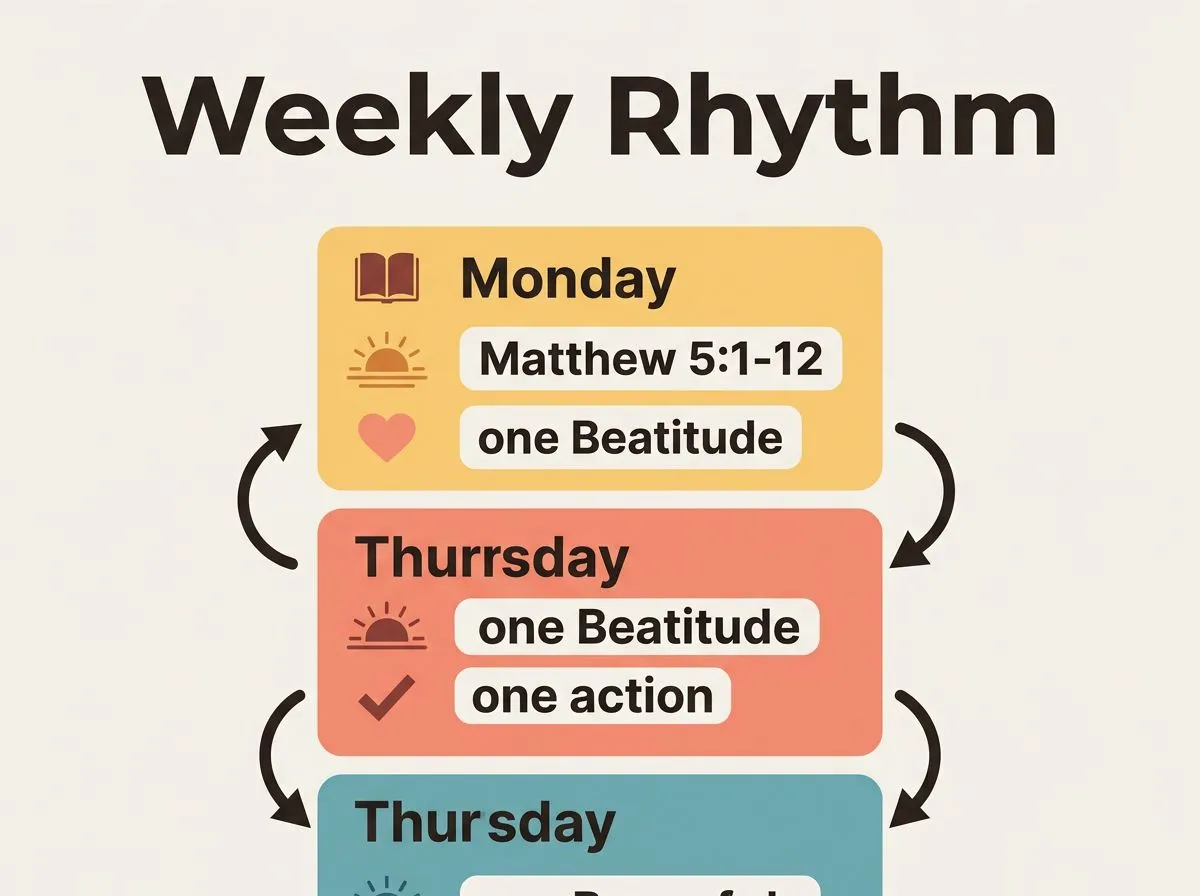
- Monday, read Matthew 5:1-12 and write one Beatitude that exposes your current posture. Then choose one concrete action that fits it, such as listening more carefully, showing patience, or apologizing first.
- Tuesday, focus on enemy-love and ask who you are tempted to dismiss. Practice one act of restraint, like not replying to a baiting message or not retelling a story in a way that makes the other person look foolish.
- Wednesday, center on forgiveness and name one resentment you have been carrying. Pray honestly, then take one step toward release, whether that is a conversation, a boundary, or a decision to stop rehearsing the offense.
- Thursday, read Matthew 7:1 and examine your speech. Catch one critical sentence before it leaves your mouth, and replace it with a truthful but kinder one.
- Friday, practice secret giving or secret prayer. Keep it simple, because hidden obedience trains your heart more than a public moment does.
- Saturday, read Matthew 6:31-33 and make one trust decision with your money, schedule, or plans. That may mean delaying a purchase, simplifying a weekend, or giving your anxiety to God before you touch your phone.
- Sunday, review the week and notice where you resisted Jesus and where you followed Him. If you missed a day, restart without drama, because steady obedience matters more than perfection.
A morning reading, one midday practice, and an evening review is enough to keep the rhythm going. Put a verse on a card, in a notebook, or on a sticky note near your coffee maker if that helps you remember it, and use a simple Bible reading plan instead of depending on an app.
You can use a digital reminder for structure too, but the tool is secondary. The Daily Bible Verse & Motivation app on the App Store offers verse widgets, reminders, and study plans, which can help some people stay consistent, yet the practice itself still comes down to one real act of obedience each day.
How to keep Jesus’ teachings practical, graceful, and not legalistic
Jesus’ teachings become crushing only when you try to treat them like a self-improvement scoreboard. The Sermon on the Mount is high, and that is exactly why you need grace, because the goal is not to prove yourself, but to be formed by Christ into someone who lives differently.

Start with the teaching that confronts you most directly, not the one that flatters you. If enemy-love feels impossible, pray there first. If worry owns your attention, begin with Matthew 6:31-33. If judgment comes easily to your mouth, sit with Matthew 7:1 until your speech softens. Hard sayings are not there to humiliate you, but to show you what kind of heart Jesus is making.
That is where grace matters. Jesus does not call you to obedience and then leave you alone with guilt, because the gospel gives you both forgiveness and power for change. You return to Scripture, prayer, repentance, and the next right step, not because you are earning God’s love, but because you already need and have His mercy.
Keep coming back to Jesus Himself, not just to a list of rules. When you read Matthew 5-7 as a living call from the King, you begin to see that transformation is the point, and the next faithful step is usually smaller than you think and more difficult than you expected.
Frequently asked questions
Do the teachings of Jesus in the Sermon on the Mount apply to modern Christians literally?
Yes, Christians usually read the Sermon on the Mount as real guidance for discipleship, not as a set of optional ideals. The article also notes that believers do not all apply every command in exactly the same way, but the core themes, like mercy, humility, faithfulness, repentance, and trust in God, are shared.
What is the easiest teaching of Jesus to start practicing first?
Most readers find it easiest to start with one visible practice that you can do this week, like prayer, forgiveness, or refusing to judge in conversation. The article’s simple rhythm shows that small, repeatable obedience is easier to sustain than trying to change everything at once.
How do I study the teachings of Jesus if I am new to the Bible?
Start with Matthew 5 through 7, because the Sermon on the Mount gives you a connected view of Jesus’ teaching and its daily-life meaning. Read it slowly in a modern translation, then write down one concrete action you can practice that day, such as a change in your speech, prayer, or attitude.
Are the Beatitudes the same as the teachings of Jesus?
No. They are a major part of Jesus’ teaching, but they are not the whole thing. In Matthew 5, they set the tone for the Sermon on the Mount by blessing the poor in spirit, the meek, the merciful, and the peacemakers, so they introduce Kingdom values rather than replace all of Jesus’ instruction.
How can I stay consistent with a weekly Bible plan?
Keep the plan small, repeatable, and tied to one teaching at a time. The article suggests using a reminder on your phone or in a Bible app, plus a simple rhythm of reading, one practice, and a review, so you can restart easily if you miss a day.


The Life of Jesus Christ: From His Birth to Resurrection
See how Matthew, Mark, Luke, and John trace Jesus from birth to the empty tomb, and why the differences matter.

What Jesus Taught About Forgiveness and Second Chances
Jesus ties forgiveness to mercy, repentance, and love for enemies. Learn how His teaching shapes real forgiveness and wise boundaries.

What Jesus Taught About Faith, Trust, and Believing in God
Jesus teaches faith as personal trust in Him. Learn what that means, how it differs from works, and how to live it daily.

What Jesus Taught About Love: Lessons for Everyday Life
Jesus taught love as sacrifice, obedience, and action. Learn how that shapes your words, choices, and relationships each day.