
The Miracles of Jesus and What They Teach Us About Faith
The common mistake is treating Jesus’ miracles like religious spectacle, but the Gospels present them as signs that show who He is and invite you to trust Him. The miracles of Jesus aren’t spiritual tricks to watch from a distance, they reveal His compassion, His authority, and His saving work in a way that still speaks to faith today.
Key takeaways
- The feeding of the 5,000 appears in 4 Gospels, making it the clearest shared miracle to study first.
- Jesus’ miracles are signs, not spiritual entertainment, so the real question is what they reveal about Him.
- Faith often starts before full proof, as John 20:29 shows: belief is blessed even without seeing.
- The miracles join 2 things together every time, power and compassion, so you should expect both in Jesus’ work.
- Christian traditions agree the miracles are real, but they differ on how signs, reason, and faith connect.
Where the Miracles of Jesus Appear in the Gospels
The major miracle accounts are spread across all four Gospels, and the repeated ones make the same point from different angles: Jesus is the same Lord in every account. The feeding of the 5,000 is the clearest example, appearing in Matthew 14, Mark 6, Luke 9, and John 6.
| Miracle account | Gospel references | Whether it appears in one Gospel or multiple Gospels | What the repetition emphasizes | Focus especially on major shared accounts such as the feeding of the 5,000 in Matthew 14, Mark 6, Luke 9, and John 6 |
|---|---|---|---|---|
| Feeding of the 5,000 | Matthew 14, Mark 6, Luke 9, John 6 | Multiple Gospels, and the only miracle recorded in all four | Jesus provides for a crowd that cannot provide for itself, and the repeated witness makes the sign impossible to miss | This is the central shared account to study closely |
| Walking on water | Matthew 14, Mark 6, John 6 | Multiple Gospels | Jesus rules over creation and steadies frightened disciples | John places it near the feeding; Matthew and Mark show the disciples’ fear |
| Healing the sick and casting out demons | Across Matthew, Mark, Luke, and John | Multiple Gospels | Jesus’ authority reaches both body and spirit | These accounts show mercy joined to power |
| Raising the dead | Across the Gospels | Multiple Gospels | Life belongs to Jesus, not death | The miracle points beyond healing to resurrection hope |
| Turning water into wine | John 2 | One Gospel | John highlights Jesus’ glory through signs | This sets the pattern for seeing miracles as revelation |
| Healing the man born blind | John 9 | One Gospel | Jesus brings sight and exposes spiritual blindness | The sign forces a decision about faith |
| Raising Lazarus | John 11 | One Gospel | Jesus has authority over death itself | The miracle points toward belief in Him before the cross and resurrection |
The repetition matters because each Gospel writer is not copying filler, he is bearing witness to the same Lord in a distinct way. Theologica notes that the four Gospels were recognized in the early church as authoritative memoirs, which helps explain why the same miracle can be told more than once without being redundant.
What Each Miracle Teaches About Faith
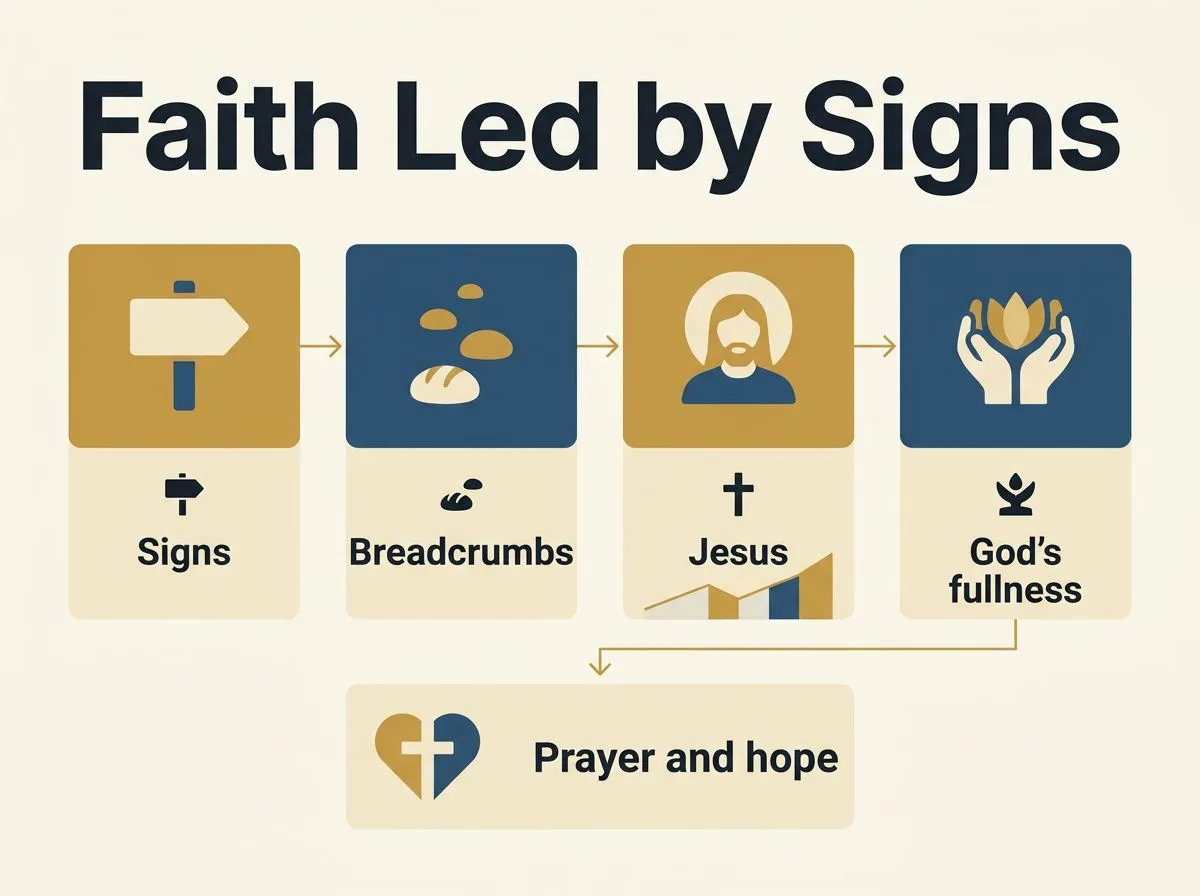
- Miracles are signs, not the final point. She Reads Truth says the miracles are breadcrumbs that lead you to Jesus, and Colossians 1:19-20 keeps the focus where it belongs: God’s fullness dwelling in Christ and reconciling all things through the cross.
- Faith trusts Jesus’ word before or without seeing. John 20:29 is the clearest statement of this, because Jesus blesses those who have not seen and yet have believed. That means faith is not built on demand for proof on your schedule.
- Compassion is never separate from power. In the feeding narratives, Jesus does not only solve hunger, He notices the crowd and meets a real human need. In healing stories, His mercy is personal, not mechanical.
- Jesus’ miracles reveal both power and mercy. He does not heal to impress; He heals to restore. He does not calm a storm only to prove control; He calms it so fearful disciples can learn who is in the boat with them.
- A common mistake is treating miracles like spiritual entertainment. The Bell Tower warns against reading them as spectacular display or easy fixes, and that warning fits the Gospel pattern well: the sign is meant to move you toward worship and obedience.
- Another mistake is asking only, ‘Did it happen?’ and stopping there. The Gospel writers want you to ask what the miracle says about Jesus, about the Kingdom of God, and about what kind of faith He is calling forth.
- The miracles also show dependence. The crowd in the feeding account brings nothing that can solve the problem, and the disciples cannot manufacture enough on their own. That is a picture of prayer when your strength runs out.
- Major miracle accounts often expose shallow belief. The Park Forum points out that Jesus sometimes found unbelief so thick that people could not receive what He was doing, which shows that the problem is not Jesus’ power but human resistance to trust.
How Major Christian Traditions Interpret the Miracles of Jesus
Christian traditions largely agree that Jesus truly worked miracles, but they differ on how to explain the relationship between miracle, faith, and reason.
| Tradition or approach | How miracles are described | What the miracles reveal about Christ | Typical emphasis about faith and reason | Keep the comparison focused on broad Christian traditions and their reading of signs and wonders |
|---|---|---|---|---|
| Evangelical Protestant | Miracles are real acts of God that confirm Jesus’ identity and His gospel message | Jesus is the Son of God whose signs point to repentance, forgiveness, and trust in Him | Faith receives Scripture’s witness and does not require spectacle to become real | Often stresses the authority of the biblical text and the call to personal belief |
| Catholic | Miracles are signs of God’s action that witness to Christ and support the Church’s teaching | Jesus reveals divine power joined to saving purpose | Faith and reason are seen as compatible, with miracles serving as signs rather than replacements for belief | Often emphasizes sacramental meaning and the unity of Christ’s works with the life of the Church |
| Eastern Orthodox | Miracles are revelation, mystery, and participation in the life of God | Jesus shows the glory of God entering human life | Faith is shaped by worship, Scripture, and holy tradition together | Often stresses wonder, healing, and the transformation of the whole person |
| Broad academic or theological study | Miracles are interpreted within Scripture’s own language and purpose, not reduced to mere spectacle | Jesus’ signs reveal His identity and redemptive mission | Reason should not flatten the text into only natural explanation | Often cautions against treating miracles as either propaganda or laboratory data |
Ancient Faith Ministries says Christian theology must read miracles the way Scripture and Tradition present them, not force them into a meaning foreign to the text. That is the real dividing line, not whether Jesus’ miracles matter, but whether they are read as signs of divine revelation or as events to be explained away before they can teach anything.
What These Miracles Mean for Faith Today
You should read the miracles of Jesus devotionally by asking what each one reveals about Christ, then letting that truth shape prayer, fear, and hope. A miracle story is not only a report of power, it is an invitation to trust the One who acts with authority, compassion, and purpose.

How to read miracle stories devotionally
Start with the scene, not the abstraction: a hungry crowd on a hillside, a storm on the sea, blind eyes opened, a grieving sister standing outside a tomb. Then ask what Jesus does, what He says, and what the people around Him fail to believe or manage to believe.
That approach keeps you from reducing the story to a moral lesson detached from Christ. The miracle is not mainly, “try harder and believe more,” it is, “look at Jesus and learn who He is.”
Why the greatest miracle is not only the act itself but Christ’s saving work
The greatest miracle is not the visible act itself. The sign always points to reconciliation with God through Jesus. Colossians 1:19-20 says God was pleased to have all His fullness dwell in Christ and to reconcile everything to Himself through the blood of His cross, which is why the miracles never stand alone as the main message.
That matters because a healed body is still not the end of the Gospel story. Jesus can feed a crowd, but He also goes to the cross. He can restore sight, but He also gives eternal life. He can raise Lazarus, but He Himself must pass through death and resurrection to save completely.
How to pray when you need God’s help
Pray honestly and specifically, without acting as if you already know how it will turn out. The miracle accounts give you permission to bring real need to Jesus, whether that need is physical, spiritual, or emotional, and to ask Him to act according to His mercy.
Do not pray as if faith means control. Faith means you ask in dependence, you listen to Scripture, and you accept that Jesus may answer in a way that deepens trust instead of satisfying curiosity.
When to focus on Jesus rather than the sign
Keep your focus on Jesus, not the sign, whenever the question becomes, “Will He do this for me?” instead of “Who is He, and how should I trust Him?” That shift keeps prayer from turning into a transaction, and it keeps disappointment from turning into unbelief.
John 20:29 speaks directly to that kind of faith. Jesus blesses those who believe without seeing, which means modern disciples are not second-class believers just because they do not watch a miracle unfold in front of them.
The miracles of Jesus are meant to steady your heart, but they are not meant to replace the Gospel itself. They show that Christ has power over hunger, sickness, storms, and death, and they invite you to rest your faith in Him, not in how dramatic an event may be.
Next Steps
- Read the feeding of the 5,000 in Matthew 14, Mark 6, Luke 9, and John 6, and note what each Gospel emphasizes about Jesus.
- Choose one miracle in John, then ask how it functions as a sign that points beyond the event itself.
- Pray through John 20:29 this week, especially if you are struggling to trust God without visible answers.
- Use Colossians 1:19-20 to keep the cross at the center when you think about miracles and faith.
- When you read another miracle story, ask one simple question: what does this reveal about Jesus that I need to believe today?
Frequently asked questions
How many miracles of Jesus are recorded in the Gospels?
The exact count depends on how you group repeated accounts and related healings, but one common chart lists 41 miracle events across Matthew, Mark, Luke, and John. The feeding of the 5,000 is the clearest shared example, and it is the only miracle recorded in all four Gospels.
Why do some miracles appear in more than one Gospel?
Because each Gospel writer is bearing witness to the same Lord from a different angle, not copying filler. Repeated accounts, like the feeding of the 5,000 in Matthew 14, Mark 6, Luke 9, and John 6, highlight what the event means for Jesus’ identity and ministry.
Are Jesus’ miracles meant to prove faith or create faith?
Jesus’ miracles point to Him, but they are not meant to replace faith with spectacle. The New Testament presents faith as coming through hearing and believing His word, and John 20:29 makes that clear by blessing those who believe without seeing.
Do Christians have to interpret every miracle account the same way?
No. Christians agree that Jesus’ miracles are real and reveal Him, but traditions differ on details such as symbolism, sacramental meaning, and how directly a miracle should be read as a sign of the kingdom. The main divide is not whether the miracles matter, but how they should be read.

The Life of Jesus Christ: From His Birth to Resurrection
See how Matthew, Mark, Luke, and John trace Jesus from birth to the empty tomb, and why the differences matter.

What Jesus Taught About Forgiveness and Second Chances
Jesus ties forgiveness to mercy, repentance, and love for enemies. Learn how His teaching shapes real forgiveness and wise boundaries.

What Jesus Taught About Faith, Trust, and Believing in God
Jesus teaches faith as personal trust in Him. Learn what that means, how it differs from works, and how to live it daily.

What Jesus Taught About Love: Lessons for Everyday Life
Jesus taught love as sacrifice, obedience, and action. Learn how that shapes your words, choices, and relationships each day.