
How to Follow Jesus in Your Everyday Life
Following Jesus means living each day under His teaching, His example, and His authority. In the Bible, that’s discipleship: hearing His call, trusting Him, and obeying Him in ordinary choices at home, at work, and in relationships. This article is about everyday discipleship, not a one-time religious moment or a church-only habit.
Key takeaways
- Follow Jesus in 3 places every day, at home, at work, and in your relationships, by choosing obedience in ordinary moments.
- Use 1 short prayer before your phone, before a hard conversation, and before bed to reset your heart toward God.
- Read a small Bible passage daily and write 1 sentence beginning, “Today I will obey this by...”.
- Choose 1 concrete act of obedience now, instead of waiting until you feel ready.
- Stay connected to Christian community through a local church, small group, or mentor for accountability and correction.
What it means to follow Jesus in everyday life
Following Jesus in everyday life means answering His call with both faith and obedience. In Matthew 4:19, Jesus says, “Follow me,” and in Matthew 28:18-20 He sends His followers to make disciples and teach obedience, which shows that discipleship is active, not passive. Luke 14 adds the cost of that call: Jesus asks for wholehearted commitment, not casual religious interest.
That matters because faith in Jesus is never meant to stay in your head alone. A person can say the right words and still resist His leadership, but a disciple keeps learning to trust Him with real decisions. That includes how you speak to your spouse, how you handle pressure at work, how you spend money, and how you treat people when no one is watching.
Following Jesus also means daily surrender instead of occasional spiritual effort. You do not belong to Him only on Sunday morning. You belong to Him in the kitchen, in the car, in a staff meeting, and in the moment you decide whether to answer with patience or frustration.
Common misconceptions about following Jesus
- Believing in Jesus is not the same as following Him; a disciple trusts Him and submits to His direction.
- Discipleship is not only for pastors or unusually mature Christians; Matthew 28:18-20 gives the mission to ordinary believers.
- Following Jesus is not mainly about looking religious or keeping up appearances; Jesus cares about the heart and the obedience that flows from it.
- A real disciple is marked by surrender, teachability, and a willingness to change when Scripture corrects you.
- A Christian life is not built on spiritual events alone, but on steady devotion, repentance, and obedience over time.
Practical steps to follow Jesus every day
You follow Jesus every day by building simple habits that keep your heart open to Him, so His words can shape what you do next. The point is not to create a performance. The point is to make room for His words to shape your choices in real time.
Pray in the way Jesus taught
Pray throughout the day using the pattern Jesus gives in Matthew 6:5-15. That prayer begins with worship, includes daily dependence, confession, and forgiveness, and ends with a request for protection from evil. Cru points to that passage as the basic framework for daily prayer, and it’s practical because it keeps prayer from becoming either a shopping list or a speech for other people.
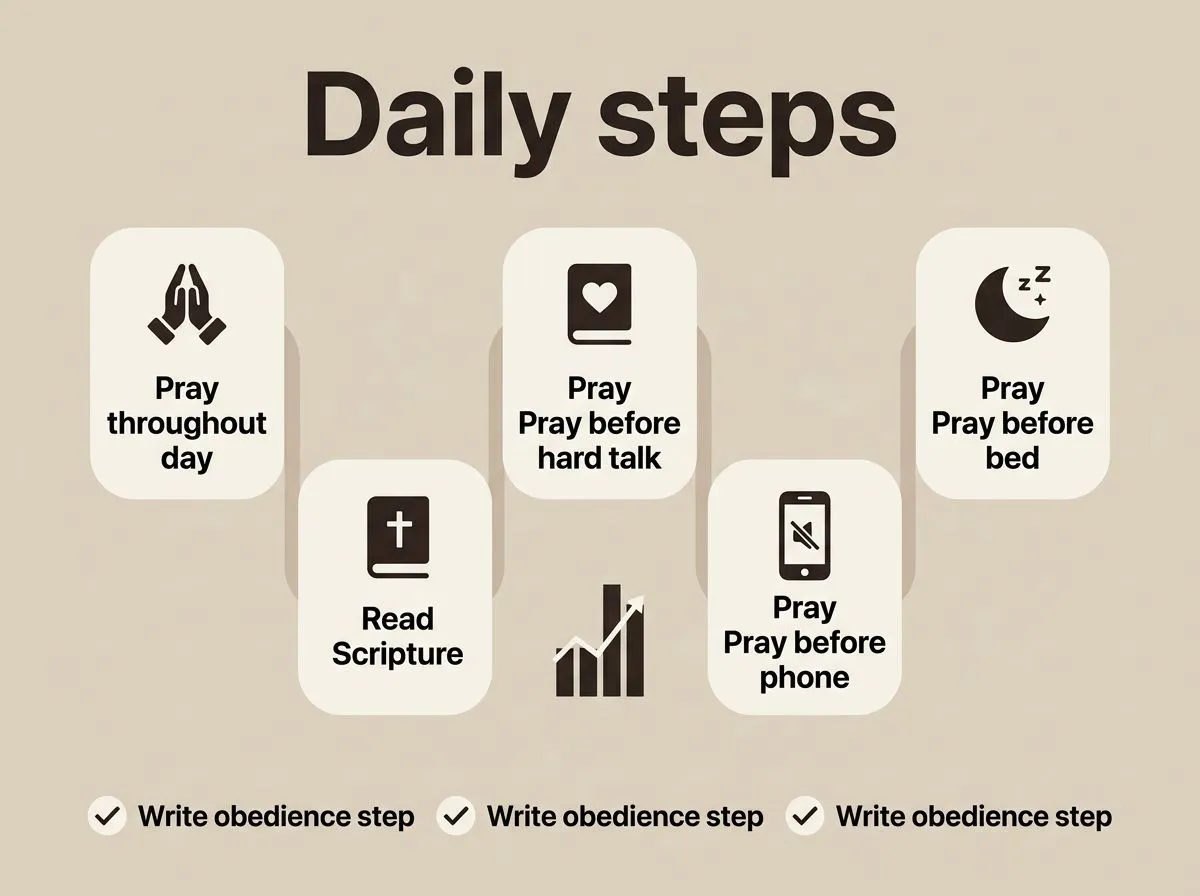
A helpful habit is to pray briefly before you open your phone, before a hard conversation, and before you go to bed. Those small prayers train you to turn toward God instead of reacting on impulse. The beginner’s mistake is waiting for a quiet, perfect moment that never comes.
Read Scripture with obedience in mind
Read the Bible regularly and ask what you need to obey, not just what you need to learn. The C.S. Lewis Institute says spiritual growth comes as we walk in faith and obedience, and that God uses the needs and circumstances of life as a training ground. That’s a useful lens because it pushes Bible reading out of the category of information and into the category of response.
Try reading a short passage and writing one sentence that begins, “Today I will obey this by...” For example, if Jesus’ words expose impatience, your response may be to pause before replying. If a passage corrects pride, your response may be to apologize first.
Choose one act of obedience at a time
Choose one act of obedience at a time in your home, work, and relationships. Jesus rarely asks for vague sincerity when He is calling for a concrete next step. If you know you need to forgive, forgive the person in front of you. If you know you need to stop a dishonest habit, stop it today, not someday after you “feel ready.”
This is where discipleship becomes visible. At home, it may look like serving without announcing it. At work, it may look like telling the truth when a shortcut would save time. In relationships, it may look like listening fully instead of winning the argument.
Stay connected to Christian community
Stay connected to Christian community for encouragement, correction, and accountability. The Gospel Coalition notes that discipleship is not something a few select Christians opt into, because Jesus’ command reaches all believers. That means you need people who can remind you of the gospel, challenge your blind spots, and pray with you when obedience feels costly.
This can happen in a local church, a small group, or a mentoring relationship where Scripture is open and honesty is welcome. The key is not proximity alone but shared direction. Good community helps you keep going when your feelings lag behind your commitment.
Let small decisions reflect Jesus
Let each small decision reflect Jesus’ character and teaching. Galatians 5:22-23 names the fruit of the Spirit, love, joy, peace, patience, kindness, goodness, faithfulness, gentleness, and self-control, and that list gives you a simple test for ordinary moments. If a choice feeds bitterness, pride, or harshness, it is pulling you away from the shape of Christ.
That’s where following Jesus becomes less dramatic and more real. The way you answer a text, the tone you use with your kids, and the patience you show in traffic all reveal what you are practicing. In Galatians 5:22-23, those everyday moments are where the Spirit’s fruit shows up, or where impatience and harshness do. Small faithfulness is not small to God.
Several Christian teaching ministries and resources, including The Intentional Life, the C.S. Lewis Institute, and Cru, all push in the same direction: discipleship shows up in ordinary life, not only in religious settings. That is the right emphasis because the daily pattern is where habits are formed and where character is revealed.
What following Jesus changes in ordinary life
Following Jesus changes the meaning of ordinary life because no part of it is spiritually neutral. A calendar, a paycheck, a text thread, a meal, and a commute all become places where His lordship matters. You begin asking not only, “Is this allowed?” but “Does this look like Jesus?”
That shift also clears up a common mistake: waiting for a bigger calling before obeying the smaller one. Jesus often meets people in simple acts of surrender, and He forms them there. The ordinary is not a distraction from discipleship, it is the place discipleship happens.
Verification checklist
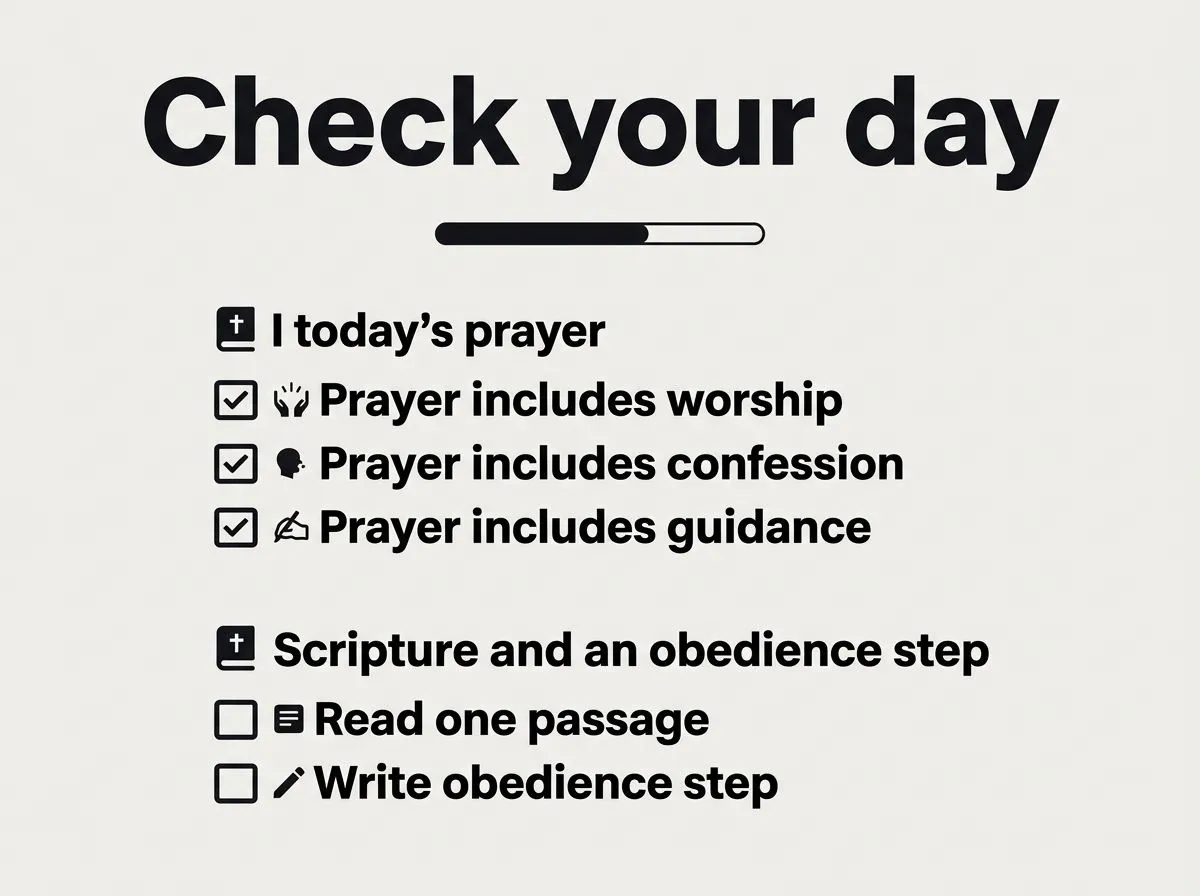
- Pray from Matthew 6:5-15 at least once today, and make sure your prayer includes worship, confession, and a request for guidance.
- Read one passage of Scripture and write one specific obedience step, with a clear action you can take before the day ends.
- Identify one relationship, task, or habit where your response must change, and carry out the change in a way another person could notice.
- Connect with one believer or church context this week, and verify that the conversation includes Scripture, encouragement, or accountability rather than casual talk only.
Frequently asked questions
What Bible verse best explains how to follow Jesus?
Matthew 4:19 is one of the clearest starting points because Jesus says, “Follow me,” and ties that call to becoming a disciple. Matthew 28:18-20 also helps because it shows that following Jesus includes learning obedience, not just hearing an invitation. Together, they show that discipleship is active and shaped by Jesus’ authority.
Do I have to be perfect to follow Jesus?
No. Following Jesus begins with repentance, faith, and a willing heart to obey Him, not sinless perfection. The article also makes clear that discipleship is a process of steady devotion over time, so growing obedience matters more than pretending you never struggle.
How do I know if I am really following Jesus or just going through religious motions?
Look for growing obedience, a teachable spirit, regular prayer, Scripture shaped decisions, and a life that increasingly reflects Jesus’ character. A real disciple also welcomes correction when Scripture confronts pride, bitterness, or a hidden habit. If your faith stays only in words or appearances, that is the warning sign the article highlights.
What should I do when following Jesus feels hard?
Return to prayer, Scripture, and Christian community, and focus on the next faithful step instead of trying to fix everything at once. The article emphasizes that discipleship is daily surrender, so the goal is not perfect momentum but one obedient response at a time. Even a small act of faithfulness can help you keep going.
Can I follow Jesus while living a normal work and family life?
Yes. The point of discipleship is that Jesus shapes ordinary life, including your schedule, relationships, habits, and priorities. The article specifically names home, work, a staff meeting, a commute, and even small moments like texting or speaking to your kids as places where following Jesus is lived out.


The Life of Jesus Christ: From His Birth to Resurrection
See how Matthew, Mark, Luke, and John trace Jesus from birth to the empty tomb, and why the differences matter.

What Jesus Taught About Forgiveness and Second Chances
Jesus ties forgiveness to mercy, repentance, and love for enemies. Learn how His teaching shapes real forgiveness and wise boundaries.

What Jesus Taught About Faith, Trust, and Believing in God
Jesus teaches faith as personal trust in Him. Learn what that means, how it differs from works, and how to live it daily.

What Jesus Taught About Love: Lessons for Everyday Life
Jesus taught love as sacrifice, obedience, and action. Learn how that shapes your words, choices, and relationships each day.