
20 Bible Verses About Money, Wealth, and Financial Wisdom
If money stress is steering your decisions, the Bible points you somewhere steadier than fear or hype: work honestly, avoid greed, save with wisdom, give with a generous heart, and stay content with what God has provided. Verses like Proverbs 21:20, which praises stored-up treasure, and Proverbs 13:11, which says wealth gathered little by little grows, treat finances as stewardship, a heart issue, and a trust issue, not proof that wealth earns God’s favor.
Key takeaways
- Proverbs 21:20 and Proverbs 13:11 support saving little by little, so set one steady habit this month instead of chasing quick gain.
- Matthew 6:24 and 1 Timothy 6:10 draw a hard line: if money starts directing your choices, it is time to change the budget and the heart.
- Luke 12:34 and 1 Chronicles 29:1 show that giving is a worship decision, so choose one gift you can make on purpose this week.
- Matthew 6:31-33 and Hebrews 13:5 call you to seek God first, which means resisting one anxious purchase or money move today.
Bible verses about money by theme: wealth, debt, generosity, and contentment
| Theme | Key verses | Main biblical emphasis | Best everyday takeaway |
|---|---|---|---|
| Wealth and work | Proverbs 10:4, Proverbs 11:28, Deuteronomy 8:18 | Diligence matters, riches are not a safe foundation, and the ability to produce wealth ultimately comes from God | Work faithfully and avoid treating income like a guarantee |
| Saving and planning | Proverbs 21:20, Proverbs 13:11 | Wise people store up what they can, and wealth built little by little is stronger than quick gain | Build habits that grow slowly and steadily |
| Greed and divided loyalty | Matthew 6:24, Luke 12:15, 1 Timothy 6:10 | You cannot serve God and money, and greed distorts the heart | Watch what your spending reveals about your master |
| Generosity and treasure | Luke 12:34, 1 Chronicles 29:1 | What you value most will shape where your treasure goes, and all resources belong to God | Give from what you have as an act of worship |
| Contentment and trust | Matthew 6:31-33, Hebrews 13:5 | Seek God first and refuse the lie that more possessions will finally make you secure | Let contentment calm anxious spending and chasing |
What these verses mean in context
- Proverbs and Deuteronomy 8:18 speak to daily life, not to a promise that every believer will become rich. Proverbs 10:4 praises diligence, Proverbs 11:28 warns that riches cannot stand forever, Proverbs 13:11 highlights wealth built gradually, and Proverbs 21:20 commends saving instead of wasting what you have.
- Matthew 6:24 and 1 Timothy 6:10 address divided loyalty. Jesus is talking about masters, which means money can become a rival allegiance when it starts directing your choices, while Paul warns that the love of money leads people into grief and spiritual harm.
- Luke 12:34 and Hebrews 13:5 connect money to the heart. Jesus says treasure exposes what you value, and Hebrews calls believers to live free from the love of money because God’s presence, not possessions, is the real basis of security.
- Do not use these verses to support prosperity gospel claims. Taken in context, they teach stewardship, contentment, generosity, and trust, not a guarantee that faithful people will always gain wealth or that lack means weak faith.
How to apply Bible verses about money to real financial decisions
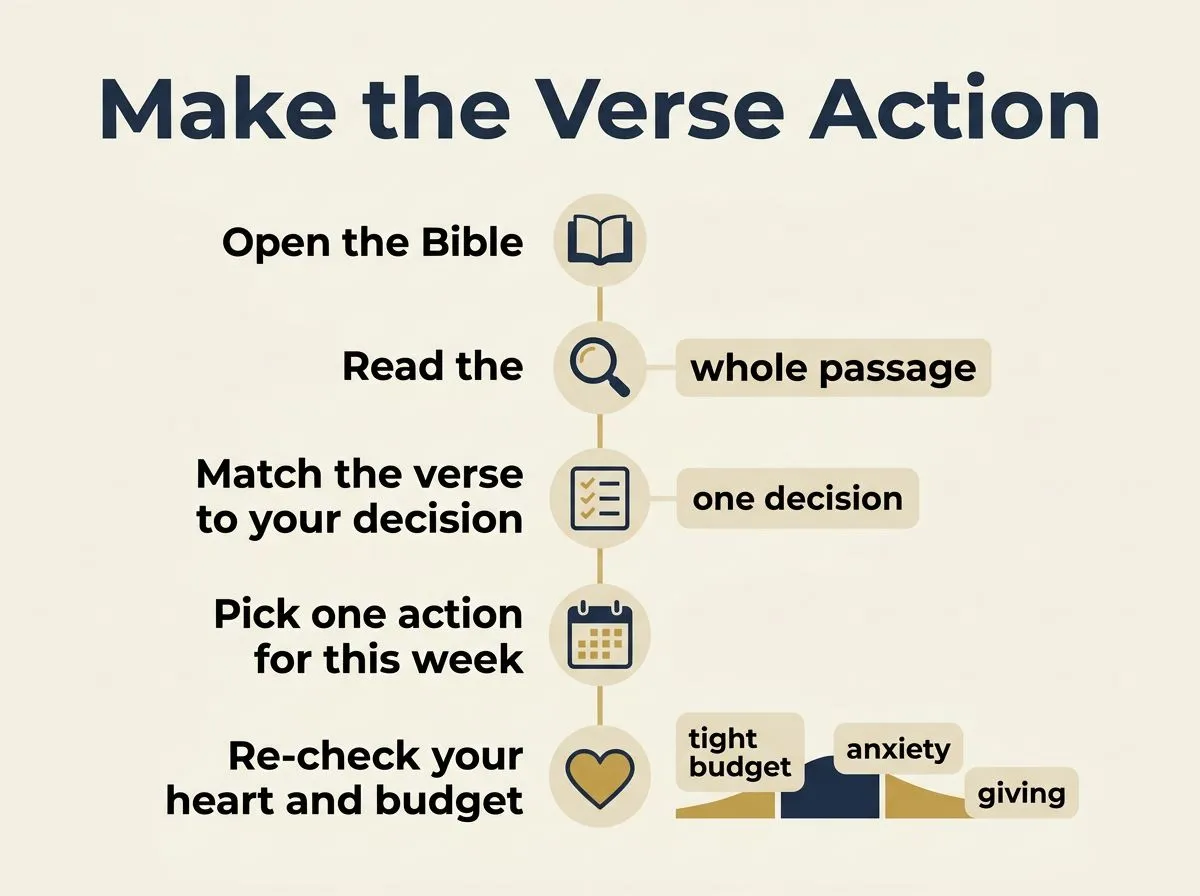
- Read the verse in context before you make the money choice. If you are considering a purchase, a loan, a job change, or a giving decision, read the whole passage around the verse so you do not turn a proverb into a promise it never made.
- Test the decision for stewardship or greed. Proverbs and Matthew 6:24 give you a practical filter: does this choice help you manage what God has entrusted to you, or does it feed impulse, status, or fear?
- Use these verses differently in debt, lack, and abundance. In debt, let Proverbs 21:20 and Proverbs 13:11 push you toward a simple plan and steady progress. In lack, Matthew 6:31-33 and Hebrews 13:5 call you to trust God without panic. In abundance, Luke 12:34 and 1 Chronicles 29:1 remind you to loosen your grip and give.
- Apply Scripture to the difference between biblical stewardship and prosperity teaching. Stewardship asks whether your finances honor God, help others, and keep your heart free. Prosperity teaching often measures faith by visible gain, but these passages point instead to faithfulness, contentment, and wise action.
A simple way to use these verses this week
Choose one verse for one decision. If your budget feels tight, start with Proverbs 21:20 and write down one expense you can cut this month. If anxiety is pushing your spending, read Matthew 6:31-33 before buying anything unnecessary, then ask whether the purchase is meeting a real need or just trying to calm your heart.
If you have room to give, remember that generosity is not only for people with a lot left after the bills. 1 Chronicles 29:1 shows David leading Israel’s offering for the temple, so the point is willing worship, not a slogan about money in general, and Luke 12:34 shows that giving reveals where treasure already lives. The goal is not to wipe out savings or planning, but to keep money from taking the center of your trust.
Which verses help with saving, spending, debt, and giving?
Proverbs 21:20 and Proverbs 13:11 are the clearest savings texts because they praise stored-up value and wealth gathered little by little. Proverbs 10:4 and Deuteronomy 8:18 are the clearest work texts because they connect diligence and ability with God’s provision.
For spending, Matthew 6:24 and Luke 12:15 are the sharpest warnings, because many bad purchases start with misplaced loyalty, not a lack of math. Together, these verses help protect you from using Scripture to bless debt, excuse fear, or justify pride when money is tight or when success comes quickly.
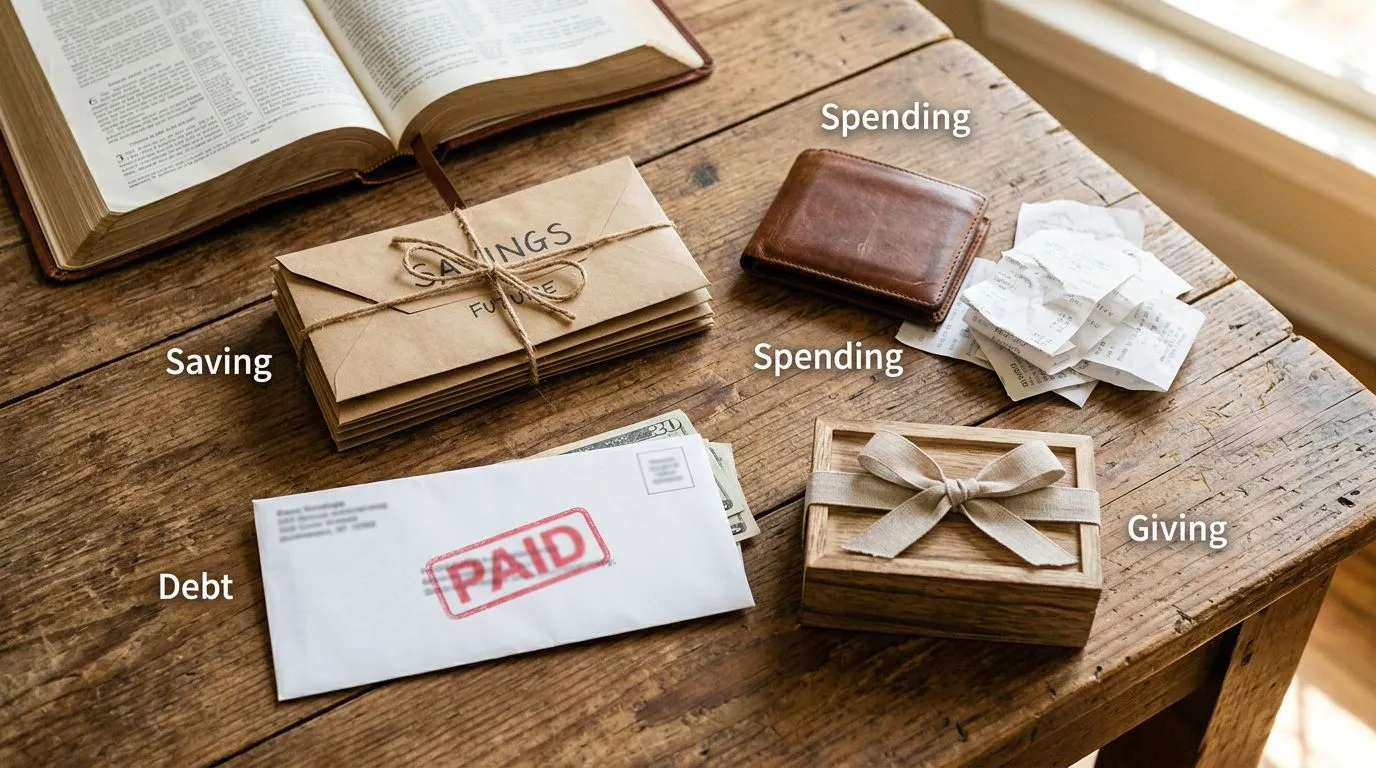
For giving, Luke 12:34 and 1 Chronicles 29:1 keep the focus on worship, not pressure. For contentment, Hebrews 13:5 is direct and practical: keep your life free from the love of money.
That distinction matters because Scripture warns against the love of money, not money itself, which helps you see wealth clearly whether you are in debt, barely getting by, or doing well. It also keeps you from treating a verse about contentment as permission to avoid responsibility, or as a weapon against those who have more.
What is the biblical balance between wealth and wisdom?
The biblical balance is simple, wealth can be useful, but wisdom decides whether it serves you or shapes you. Deuteronomy 8:18 does not praise wealth as an end in itself, it reminds you that the ability to produce it comes from God, so pride has no place. Proverbs 11:28 gives the needed warning: riches can fail, so they are a weak foundation for identity or peace.
That balance matters because the Bible never asks you to pretend money is meaningless. It asks you to treat money as a tool under God’s rule. When your budget, your giving, and your savings all answer to that truth, money stops feeling like a master and becomes a place to practice faithfulness.
How should a Christian read money promises without falling for extremes?
Read money passages as wisdom and discipleship, not as a formula. Proverbs often describes what is generally true, while Jesus and Paul show what happens when wealth starts competing with God. That means you should expect guidance, not a guaranteed outcome chart.
The healthy middle is straightforward: do honest work, save steadily, give generously, and refuse greed. If your current financial season is hard, the Bible does not shame you for it. It calls you to trust God, make wise choices, and keep your heart free from the lie that money can do what only God can do.
What should you do with these verses today?
Use these verses as a filter for your next decision, not as decoration for a quote graphic. Before you spend, save, borrow, or give, ask whether the choice reflects diligence, contentment, and trust in God. If it does, move forward with a clear conscience. If it feeds greed, fear, or showmanship, step back and choose differently.
The strongest financial wisdom in Scripture is not complicated. Keep working, keep your heart open, keep your needs in view, and keep God first. That is how stewardship stays rooted in contentment, generosity, and trust, and how money remains a tool you manage instead of a master that manages you.
Frequently asked questions
Which Bible verse is best for financial stress?
Matthew 6:31-33 is the clearest verse for financial stress because Jesus tells you to seek God’s kingdom first instead of letting worry drive your decisions. Philippians 4:19 is also comforting, but in this set Matthew 6 speaks most directly to anxiety about money and daily needs.
What does the Bible say about being rich?
The Bible does not condemn wealth itself, but it repeatedly warns that riches can fail and should never become your foundation for peace or identity. Proverbs 11:28 says wealth is not a safe place to stand, and Deuteronomy 8:18 reminds you that the ability to produce wealth comes from God, so the issue is the heart, not the amount.
Is debt a sin according to the Bible?
Debt is treated seriously in Scripture, but the Bible does not give a one-line rule that makes every debt sinful. The bigger concern is stewardship, because debt can limit freedom and add pressure, so Proverbs 21:20 and Proverbs 13:11 push you toward wise planning and steady repayment.
How can I tell if I am following biblical stewardship or prosperity teaching?
Biblical stewardship asks whether your money choices honor God, help others, and keep your heart free, while prosperity teaching often treats faith like a formula for getting more. A simple test is whether your decisions reflect contentment, generosity, and obedience, or whether they are driven by greed, fear, or showmanship.


This Bible Verse Can Help You Face a Difficult Day
Psalm 46:1 is a strong Bible verse for a difficult day because it says, “ God is our refuge and strength , a very present help in trouble.” Put simply, God is…

Before Your Next Important Decision, Remember What Proverbs Says
A common mistake is treating Proverbs like a magic formula that guarantees the outcome you want if you quote the right verse. The better way is simpler, and st…

Read This Bible Verse When You're Worried About Your Future
If you’re worried about your future, start with Jeremiah 29:11. It reminds you that God knows your life, sees what you can’t see, and is still working with pur…

This Bible Verse Is a Powerful Reminder of God's Promises
Jeremiah 29:11 is one of the clearest Bible verses about God’s promises: “For I know the plans I have for you, declares the Lord, plans for welfare and not for…