
20 Bible Verses About Giving, Generosity, and Helping Others
If you want Bible verses about giving that actually help you live generously, start with the context, not just the quote. Scripture treats giving as worship, mercy, stewardship, and trust in God, and it warns against giving for applause or as a shortcut to material gain.
Key takeaways
- Giving in Scripture is tied to worship and mercy, not applause or pressure, from Genesis 14 to Matthew 6.
- Several passages connect generosity to the poor, including Deuteronomy 15, Proverbs 19:17, and Isaiah 58:7.
- 2 Corinthians 9:6-8 says giving should be decided in the heart, and it must not be forced.
- The New Testament church met real needs with shared resources, as seen in Acts 2:44-45 and Acts 4:32-35.
- A generous life is practical, meaning you share what you have, support believers, and practice hospitality now.
20 Bible Verses About Giving in Their Biblical Context
- Genesis 14:18-20, Melchizedek brings out bread and wine and Abram gives him a tenth. The speaker is Abram, the audience is Melchizedek, and the setting is victory after rescue. The point is that giving can be a response of gratitude to God, not a payment to earn His favor.
- Exodus 25:1-2, the Lord tells Moses to receive an offering from anyone whose heart moves them. The speaker is God through Moses, and the audience is Israel at Sinai. This shows that God values willing gifts, not forced ones.
- Deuteronomy 15:7-8, Moses tells Israel not to harden their heart or shut their hand to a poor brother. The audience is the covenant community in the promised land. The immediate lesson is practical: open your hand and meet real need within your reach.
- Deuteronomy 15:10, the same chapter says to give freely and without a grudging heart. This is not a sales pitch for blessing, but a command to let generosity shape the giver’s attitude as well as the gift.
- Proverbs 3:9-10, Proverbs teaches, “Honor the Lord with your wealth” and with the firstfruits of all your produce. The writer is a fatherly teacher speaking to a son. The lesson is that money and harvest belong under God’s honor, not self-protection.
- Proverbs 11:24-25, one gives freely and grows richer, another withholds more than is right and only suffers want. The point is not a mechanical promise, but a wisdom pattern: open hands usually fit better with life under God than clenched fists do.
- Proverbs 19:17, whoever is generous to the poor lends to the Lord, and He will repay him. The writer is Solomon’s wisdom tradition, speaking to readers who may think helping the poor is a loss. The verse says God treats mercy as something He notices and values.
- Proverbs 22:9, the one with a generous eye is blessed because he shares bread with the poor. This verse pictures giving as food on the table, not abstract charity. It matters because generosity in Scripture starts with what you can actually share.
- Psalm 112:5, it is well with the one who deals generously and lends with justice. The psalm describes the righteous person, not a prosperity formula. The emphasis is on character, fairness, and steady care for others.
- Isaiah 58:7, the Lord calls His people to share bread with the hungry and bring the homeless poor into their house. Isaiah speaks to people whose fasting had become empty ritual. The verse teaches that true worship shows up in visible mercy.
- Matthew 6:1-4, Jesus tells His disciples not to give to the needy for show, but in secret. The speaker is Jesus, the audience is His followers in the Sermon on the Mount. The lesson is blunt: if praise from people is the goal, that praise is the only reward you get.
- Luke 6:30, Jesus says, “Give to everyone who begs from you,” and do not demand your goods back from the one who takes them. In context, He is training disciples in a radical generosity that does not keep score. It pushes against the instinct to calculate every gift.
- Luke 6:38, Jesus says, “Give, and it will be given to you,” using the image of a good measure pressed down and running over. The verse belongs to a broader teaching on mercy, judgment, and the way disciples treat others. It is a call to generous living, not a guarantee of easy money.
- Acts 2:44-45, the early believers held things in common and sold property to meet need among them. The audience is the new church in Jerusalem after Pentecost. This shows that generosity can be organized, sacrificial, and immediate.
- Acts 4:32-35, the believers are of one heart and one soul, and no one says any possession is his own. The apostles oversee distribution so that there is no needy person among them. The point is that Christian community should make visible room for material help.
- Romans 12:13, Paul tells believers to contribute to the needs of the saints and seek to show hospitality. The writer is Paul, the audience is the church in Rome, and the setting is a practical list of gospel-shaped habits. Generosity here includes support and welcome, not just cash.
- 2 Corinthians 8:1-5, Paul points to the Macedonian churches, who gave beyond their means and first gave themselves to the Lord. The audience is the Corinthian church, and the situation is a collection for struggling believers. The lesson is that giving starts with surrender, then moves to action.
- 2 Corinthians 9:6-8, Paul says the one who sows sparingly reaps sparingly, and the one who sows bountifully reaps bountifully. He adds that each person should give as decided in the heart, not under compulsion, because God loves a cheerful giver. This is one of the clearest passages on willing, joyful giving.
- Philippians 4:15-19, Paul thanks the Philippians for sending support and says he has learned contentment in every situation. The church had partnered with his ministry more than once. The meaning is that giving supports real gospel work, and contentment keeps giving from becoming manipulation.
- 1 John 3:17-18, if anyone has the world’s goods and sees a brother in need yet closes his heart, God’s love does not remain in him. John addresses believers who must love in deed and truth. This verse ties giving to ordinary compassion you can see and touch.
What These Verses Teach About Generosity, Stewardship, and Care for the Needy
These passages teach that biblical giving is a matter of worship, justice, and trust, not a religious trick for getting more stuff. Proverbs speaks to daily wisdom, Deuteronomy speaks to covenant duty, the Psalms praise the generous person, the Gospels show Jesus forming merciful disciples, and Paul shows churches giving with purpose and joy. Taken together, they make one thing clear: generosity is part of a life that belongs to God.
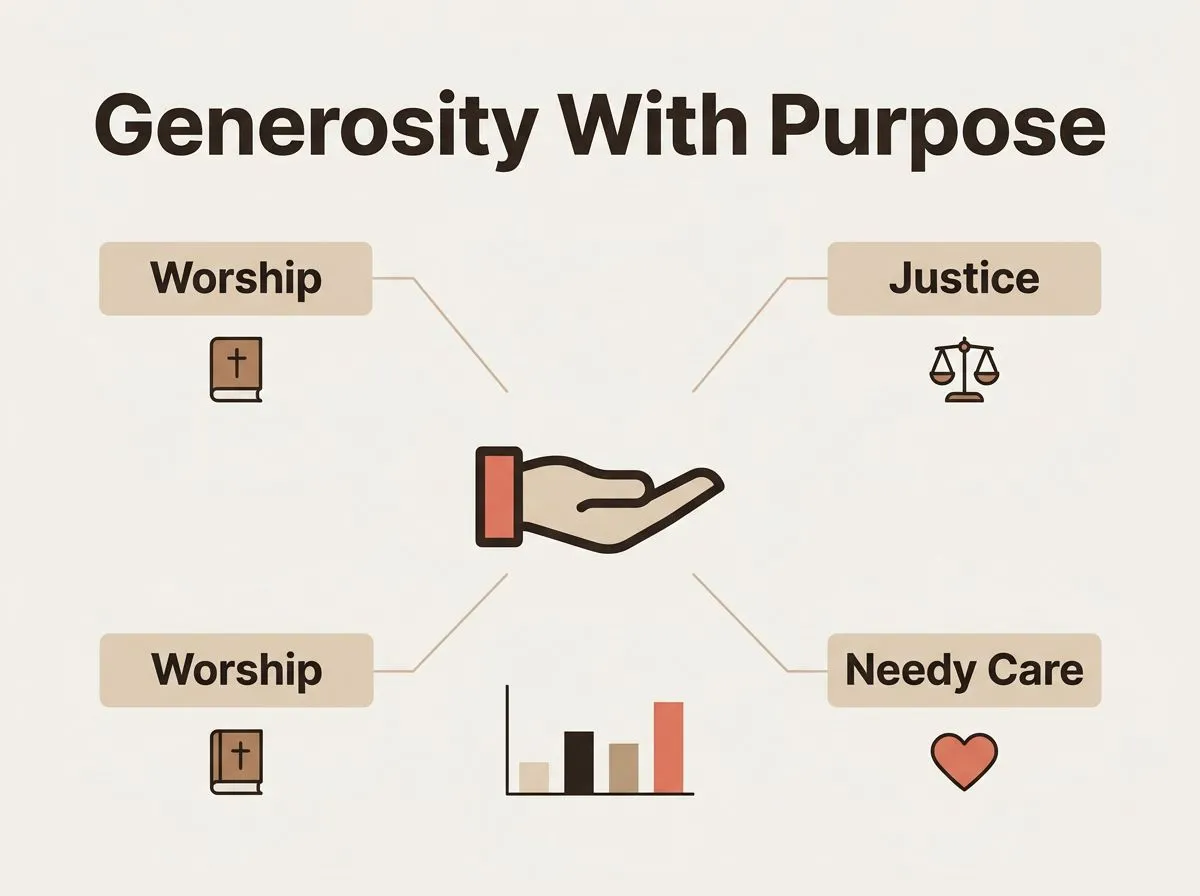
The Bible also draws a sharp line between public performance and secret obedience. Jesus directly warns against giving to be seen by others in Matthew 6, because that kind of gift has already collected its reward in human praise. Secret giving does not mean hiding every act from anyone forever, it means the motive is God’s approval, not your image.
Malachi 3:10 needs careful handling. Crossway and Logos both note the force of the passage, but the verse sits inside God’s covenant lawsuit against Israel, where faithless worship and neglected tithes had become part of the problem. So the passage is a serious call to faithfulness, not a blank check that turns giving into a simple formula for more money.
That is why the New Testament focus is so helpful. World Vision highlights how 2 Corinthians 9:7 and Luke 6:38 connect generosity with a heart aligned to God, and that is exactly the balance Scripture keeps. Giving matters because it reflects the character of the Giver, not because it can be used to control outcomes.
This is also where stewardship belongs in the picture. Scripture assumes that what you have is entrusted to you, so you are responsible for using it well, whether that means supporting local believers, feeding a neighbor, or meeting a real need quietly. That is why verses about helping the poor are never only about money, they are about mercy made concrete.
If you read these verses as a promise of personal enrichment, you miss their center. If you read them as a call to wiser, freer, more compassionate living, they open up in a much better way. Giving becomes one of the ways you participate in God’s care for people, and that is far richer than a transaction.
How to Apply Bible Verses About Giving in Everyday Life
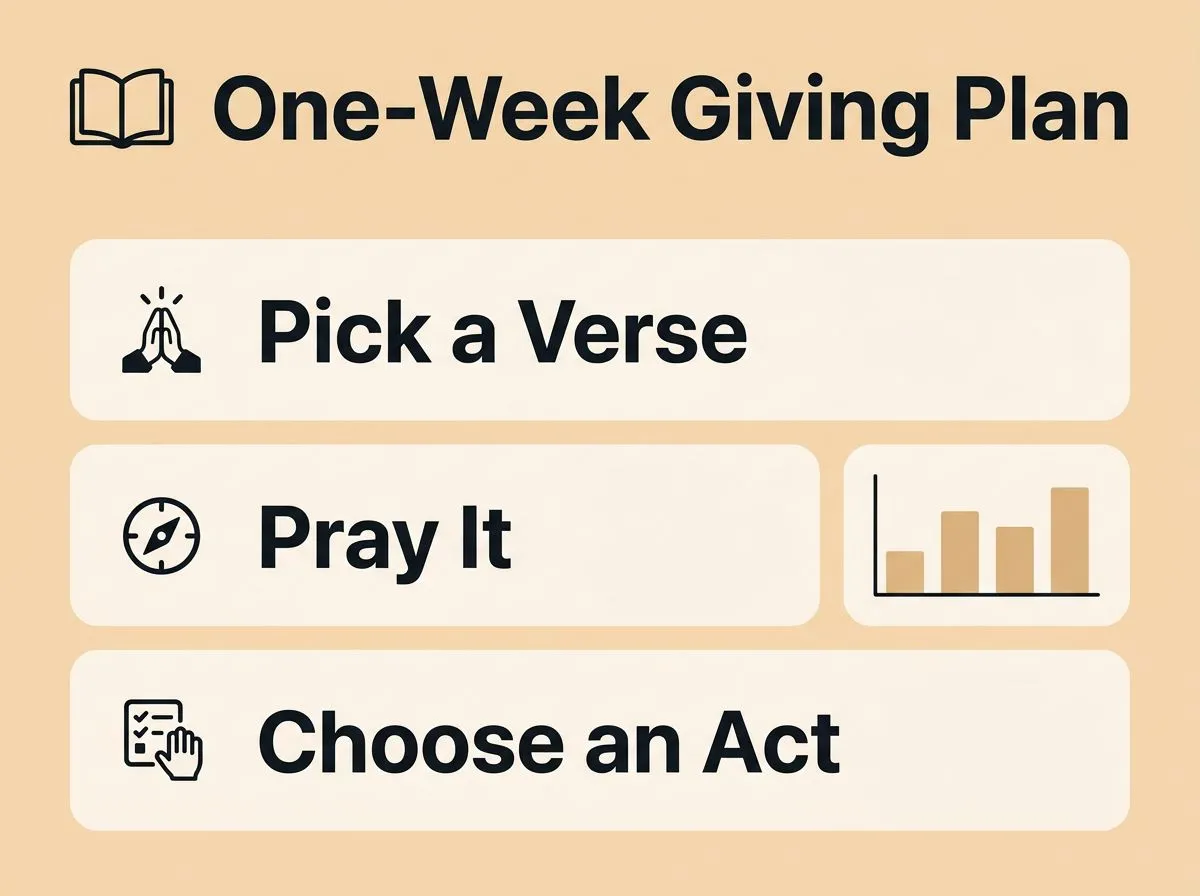
- Choose one passage to pray through this week, such as Proverbs 19:17, Luke 6:38, or 2 Corinthians 9:7, and write one concrete act of giving it suggests.
- Decide what kind of giving fits the need in front of you: regular support for your church, a one-time gift, help for a neighbor, or quiet service that saves someone time and burden.
- Read the verse in its immediate context before you act, so you do not turn a promise of God’s care into a guarantee of personal return. That keeps you from using Scripture as a bargain.
- If you are giving through a church or ministry, use a trusted system that makes support simple and transparent. Organizations and tools such as SecureGive, World Vision, Bright Hope, Global Christian Relief, Logos, Crossway, and Pure Flix each serve different kinds of Christian giving, teaching, or outreach, so choose the one that fits your purpose instead of treating them all the same.
- End with prayer by thanking God for what He has already placed in your hands and asking Him to make you quick to notice need. That keeps generosity tied to gratitude rather than pressure.
A wise next step is simple: pick one verse, one need, and one act of obedience. If you do that this week, the passage will move from being a line on a page to a habit of mercy in your home, church, or neighborhood. And that is where biblical generosity starts to look like Jesus in ordinary life.
Frequently asked questions
Which Bible verse is best for giving to the poor?
Proverbs 19:17 and Proverbs 22:9 are strong starting points because they directly connect generosity with care for the poor and needy. Proverbs 22:9 is especially concrete, since it pictures shared bread, not abstract charity. If you want a verse that shows generosity as helping real need, these two are among the clearest.
What Bible verse says to give quietly?
Matthew 6:1-4 teaches giving in secret, with the focus on God’s approval instead of public recognition. Jesus warns that if praise from people is your goal, that praise is all you get. The point is not to hide every act forever, but to keep the motive on God rather than your image.
Does Malachi 3:10 apply to Christians today?
It is often read in Christian teaching on stewardship, but the passage is part of Israel’s covenant life, so the article should explain its setting before drawing application. In context, it is a serious call to faithfulness, not a blank check that turns giving into a simple formula for more money. Christians can learn from it, but they should read it through its original covenant setting.
What does Paul mean by cheerful giving in 2 Corinthians 9:7?
Paul is urging believers to give freely and willingly, not out of pressure, as part of his teaching on supporting fellow believers in need. He connects cheerful giving with a heart that has already decided before God, rather than with guilt or compulsion. In the passage, generosity is meant to be a joyful act of trust, not a forced religious duty.


This Bible Verse Can Help You Face a Difficult Day
Psalm 46:1 is a strong Bible verse for a difficult day because it says, “ God is our refuge and strength , a very present help in trouble.” Put simply, God is…

Before Your Next Important Decision, Remember What Proverbs Says
A common mistake is treating Proverbs like a magic formula that guarantees the outcome you want if you quote the right verse. The better way is simpler, and st…

Read This Bible Verse When You're Worried About Your Future
If you’re worried about your future, start with Jeremiah 29:11. It reminds you that God knows your life, sees what you can’t see, and is still working with pur…

This Bible Verse Is a Powerful Reminder of God's Promises
Jeremiah 29:11 is one of the clearest Bible verses about God’s promises: “For I know the plans I have for you, declares the Lord, plans for welfare and not for…