
25 Bible Verses About Faith and Trusting God
When fear rises before a doctor’s appointment, a job interview, or a hard family conversation, Bible verses about faith and trusting God give you a steadier place to stand. Scripture does not tell you to act like the problem is small. It calls you to see God clearly, trust him honestly, and keep walking with him in the middle of uncertainty.
Key takeaways
- Hebrews 11:1, Romans 10:17, and Mark 9:24 show that faith can grow through hearing God’s word, and honest prayer.
- Proverbs 3:5-6 and Isaiah 26:3 connect trust with 2 results, direction and peace, when your own understanding feels limited.
- John 14:1 and Psalm 56:3 speak to fear directly, so you can pray them on the same day you face a hard decision.
- Read each passage in context first, because 1 verse can sound like a promise it was never meant to make.
- Start with 1 verse a day for 7 days, then write down 1 decision you need to trust God with this week.
This guide focuses on verses in context, so you can see who is speaking, what is happening, and what each passage actually says. It does not turn every verse into a promise of painless outcomes.
Key Bible Verses About Faith and Trust in God

- Hebrews 11:1 says, “Now faith is the assurance of things hoped for, the conviction of things not seen.” The writer is defining faith for believers, and the next verses in the chapter show that this faith is grounded in God’s past faithfulness, not in wishful thinking.
- Hebrews 11:3 says that by faith we understand the world was created by the word of God. That means faith is not blind; it begins with trusting God’s word about realities we cannot verify by sight.
- Proverbs 3:5-6 says, “Trust in the LORD with all your heart, and do not lean on your own understanding.” These are wisdom sayings directed to the listener, and they call for whole-hearted trust before any promise about straight paths is made.
- Psalm 56:3 says, “When I am afraid, I put my trust in you.” David speaks these words in a fearful season, so the verse shows what trust can sound like on a hard day: not confidence in yourself, but dependence on God.
- Isaiah 26:3 says God keeps in perfect peace the one whose mind is stayed on him. The promise is tied to a settled mind, so the passage points to focused trust rather than scattered fear.
- 2 Corinthians 5:7 says, “For we walk by faith, not by sight.” Paul is describing the Christian life as a daily walk, which means trust is not only for crisis moments; it shapes ordinary decisions too.
- John 14:1 says, “Let not your hearts be troubled. Believe in God; believe also in me.” Jesus speaks to his disciples before the cross, and the setting matters because he is preparing them for loss, confusion, and continued trust in him.
- Mark 9:24 gives one of the most honest prayers in Scripture: “I believe; help my unbelief!” A father says this to Jesus, and the line shows that real faith can include weakness without pretending otherwise.
- Romans 10:17 says, “So faith comes from hearing, and hearing through the word of Christ.” Paul is explaining how faith grows, and the verse keeps the focus on God’s spoken word, not on private feelings alone.
- 2 Corinthians 5:7 and Hebrews 11:1 work together well: one describes the life of faith, the other defines the heart of faith. Read together, they show that trust in God affects both conviction and conduct.
- Psalm 56:3 and John 14:1 are also linked by situation. One comes from fear in David’s life, the other from trouble in the disciples’ lives, and both answer fear with trust in God’s presence and promises.
- Proverbs 3:5-6 and Isaiah 26:3 connect trust with direction and peace. The first tells you not to lean only on your own insight, and the second says the mind stayed on God is kept in peace.
- Romans 10:17 and Hebrews 11:1 connect hearing and believing. Faith is not self-generated mood, but a response to God’s word that produces assurance.
- Mark 9:24 sits beside the other trust texts as a bridge between struggle and belief. It shows that faith does not begin with polished certainty; it begins with bringing honest weakness to Jesus.
- John 14:1 and 2 Corinthians 5:7 reinforce New Testament trust in Christ. The disciples are told to believe in Jesus, and believers are later described as walking by faith, which shows continuity between Jesus’ words and the apostolic teaching.
How These Verses Connect Across Scripture
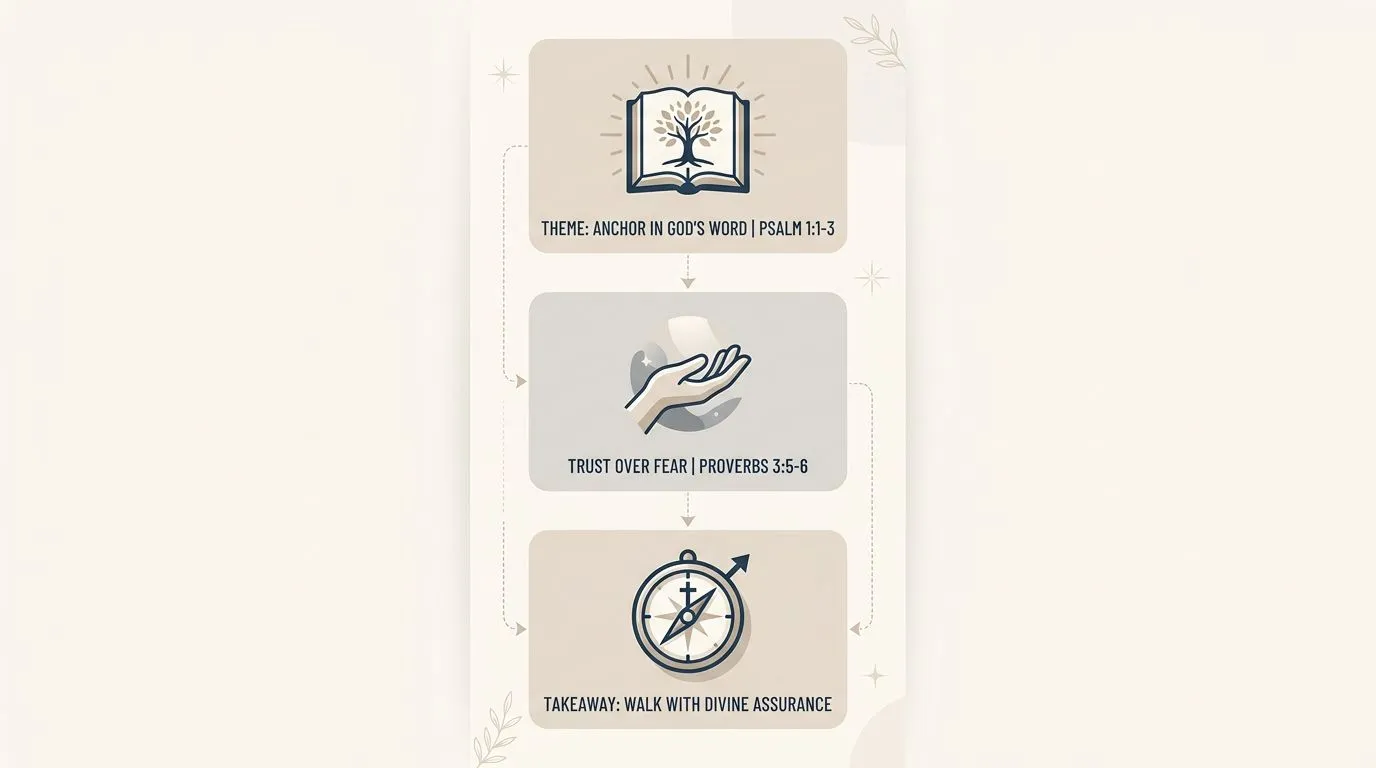
| Theme | Primary verse or passage | Close parallel | Takeaway |
|---|---|---|---|
| Assurance | Hebrews 11:1 | 2 Corinthians 5:7 | Faith gives confidence in God even when you cannot yet see the outcome. |
| Trust in fear | Psalm 56:3 | John 14:1 | Scripture does not deny fear; it answers fear with a call to trust God and Christ. |
| Guidance | Proverbs 3:5-6 | Isaiah 26:3 | Trust is tied to direction and peace when your own understanding feels limited. |
| Hearing the word | Romans 10:17 | Hebrews 11:1 | Faith grows from hearing God’s word and responding to it with trust. |
| Weak faith | Mark 9:24 | Matthew 17:20 | Biblical faith can be small or struggling and still be brought honestly to Jesus. |
| Perseverance | Hebrews 11:3 and 11:6 | 2 Corinthians 5:7 | Faith is not a one-time reaction; it is a way of living before God over time. |
How to Read and Apply Bible Verses About Faith in Daily Life
Read the verse in context first, because faith passages can be misunderstood when they are lifted out of the scene that gives them meaning. John 14:1, for example, is Jesus speaking to troubled disciples before the cross, so it is a word of comfort in hardship, not a guarantee that you will never face hardship. The same approach helps you read Psalm 56:3 as a prayer in fear, not a denial of fear.
Turn one verse into a prayer
Take one line and speak it back to God in your own words. You might pray, “Lord, I am afraid, and I am choosing to trust you,” from Psalm 56:3, or “Help me not to lean on my own understanding,” from Proverbs 3:5-6. That simple step keeps the verse personal without changing what it says.
Do not turn trust into a shortcut
A verse about faith is not a promise that every obstacle will disappear quickly or that every answer will come on your timeline. Mark 9:24 is helpful here, because the man says, “I believe; help my unbelief!” while his weakness is still present. The practical lesson is to keep praying, keep obeying, and keep waiting without making the text say more than it does.
Choose one verse for the week
Pick one passage, write the reference where you will see it each day, and use it in the same place, such as a mirror, notebook, or phone lock screen. If fear is the main struggle, start with Psalm 56:3. If decisions are the struggle, start with Proverbs 3:5-6. If doubt needs a response, start with Romans 10:17 and keep listening to Scripture until your thoughts slow down enough to hear it.
A helpful next step is to read one of these passages slowly once in the morning and once at night for a week. Logos, Cru, Desiring God, Christian Aid, Renew.org, and Crossway all point readers back to the same habit: let Scripture shape trust over time, not just in a single emotional moment. When anxiety returns, go back to the verse, pray it, and ask what faithful obedience looks like in front of you right now.
Next Steps for Reading and Trusting Scripture
- Choose one verse that speaks directly to your present need, such as Psalm 56:3, Proverbs 3:5-6, or John 14:1.
- Read the full passage around it so you can see who is speaking and why those words were given.
- Pray the verse back to God in one sentence, using your own words without changing the meaning.
- Write the reference somewhere you will see it today, then return to it tonight.
- Repeat the same passage for a week, and let the words of Christ and Scripture shape your trust step by step.
Frequently asked questions
What is the best Bible verse about faith for someone who feels afraid?
Psalm 56:3 is especially fitting because David speaks it from a fearful season: “When I am afraid, I put my trust in you.” John 14:1 is also strong because Jesus tells troubled disciples not to let their hearts be troubled, then calls them to believe in Him. Together, they meet fear with trust instead of denial.
What is the difference between faith and trust in the Bible?
Faith is believing God and relying on what He says, while trust shows that belief in the way you live, obey, and keep steady under pressure. Hebrews 11:1 describes faith as assurance about what you cannot yet see, and Proverbs 3:5-6 shows trust as wholehearted dependence rather than leaning on your own understanding.
How do I know if a verse is meant as a promise for me today?
Read it in context first, then ask whether it is a direct promise, a general truth about God’s character, or an instruction to a specific person or group. That matters because some verses, like John 14:1, are spoken into a particular moment, while others, like Proverbs 3:5-6, give wisdom that still guides believers today.
Can I use the same verse for prayer every day?
Yes. Repeating one verse in prayer can help you keep God’s truth close, especially when you need peace, courage, or patience. The article suggests choosing one passage for the week, praying it in your own words, and returning to it morning and night so it shapes your trust over time.


This Bible Verse Can Help You Face a Difficult Day
Psalm 46:1 is a strong Bible verse for a difficult day because it says, “ God is our refuge and strength , a very present help in trouble.” Put simply, God is…

Before Your Next Important Decision, Remember What Proverbs Says
A common mistake is treating Proverbs like a magic formula that guarantees the outcome you want if you quote the right verse. The better way is simpler, and st…

Read This Bible Verse When You're Worried About Your Future
If you’re worried about your future, start with Jeremiah 29:11. It reminds you that God knows your life, sees what you can’t see, and is still working with pur…

This Bible Verse Is a Powerful Reminder of God's Promises
Jeremiah 29:11 is one of the clearest Bible verses about God’s promises: “For I know the plans I have for you, declares the Lord, plans for welfare and not for…