
The Bible Verse You Should Read Before Starting Your Day
A good Bible verse to start your day with God is usually short, prayerful, and centered on trust, guidance, gratitude, or peace.

Morning Prayer for Miracles Start Your Day with Faith and Hope
READ PRAYER →
You will remain on the same website.
If you want one clear place to begin, Psalm 5:3 is a strong morning verse, and Psalm 143:8, Psalm 90:14, Psalm 30:6, and Isaiah 26:9 also offer a faithful way to begin the day with God.
Key takeaways
- Psalm 5:3 is a strong 1-verse start because it turns your first minute into a morning prayer.
- Read 1 verse slowly, then pray it back to God in your own words, and keep the whole habit under 5 minutes.
- Psalm 143:8, Psalm 90:14, Psalm 30:6, and Isaiah 26:9 each fit a different need, from guidance to joy after hard nights.
- If you use a verse of the day, add a 3 to 5 minute follow-up reading so the verse stays in context.
This guide is for morning verses used in prayer and reflection, not for every daily reading plan or every Scripture that mentions the morning.
Which Bible verses are best to start your day with God?
The best Bible verses to start your day with God are the ones that help you turn your attention toward Him before your mind fills up with everything else.
Psalm 5:3 is a prayer for God to hear you in the morning, Psalm 143:8 asks for His steadfast love and guidance, Psalm 90:14 asks to be satisfied with His love, Psalm 30:6 remembers joy after sorrow, and Isaiah 26:9 shows a heart that seeks God early.

Each one has a slightly different tone. Psalm 5:3 is honest and alert, a morning request that says, “Lord, I am here.”
Psalm 143:8 sounds like trust mixed with a need for direction, while Psalm 90:14 is a quiet prayer for contentment.
Psalm 30:6 helps when yesterday was heavy, and Isaiah 26:9 fits the reader who wants to start the day longing for God’s presence and wisdom.
That is why one carefully chosen verse can be more helpful than rushing through a long chapter when you are still waking up.
A short verse is easier to remember, easier to pray, and easier to carry into the first hour of work, school, or family life.
A verse of the day can also be a practical starting point for a morning devotional.
Bible Gateway’s Verse of the Day is one familiar example, and a study tool with notes and commentary beside the verse can help you pause, reflect, and grow one verse at a time Bible Gateway.
How do you read a morning verse in context?
Reading a morning verse in context means noticing who is speaking, who is being addressed, and what kind of prayer or worship moment the verse comes from.
That keeps the verse from turning into a slogan and helps you apply it with honesty.
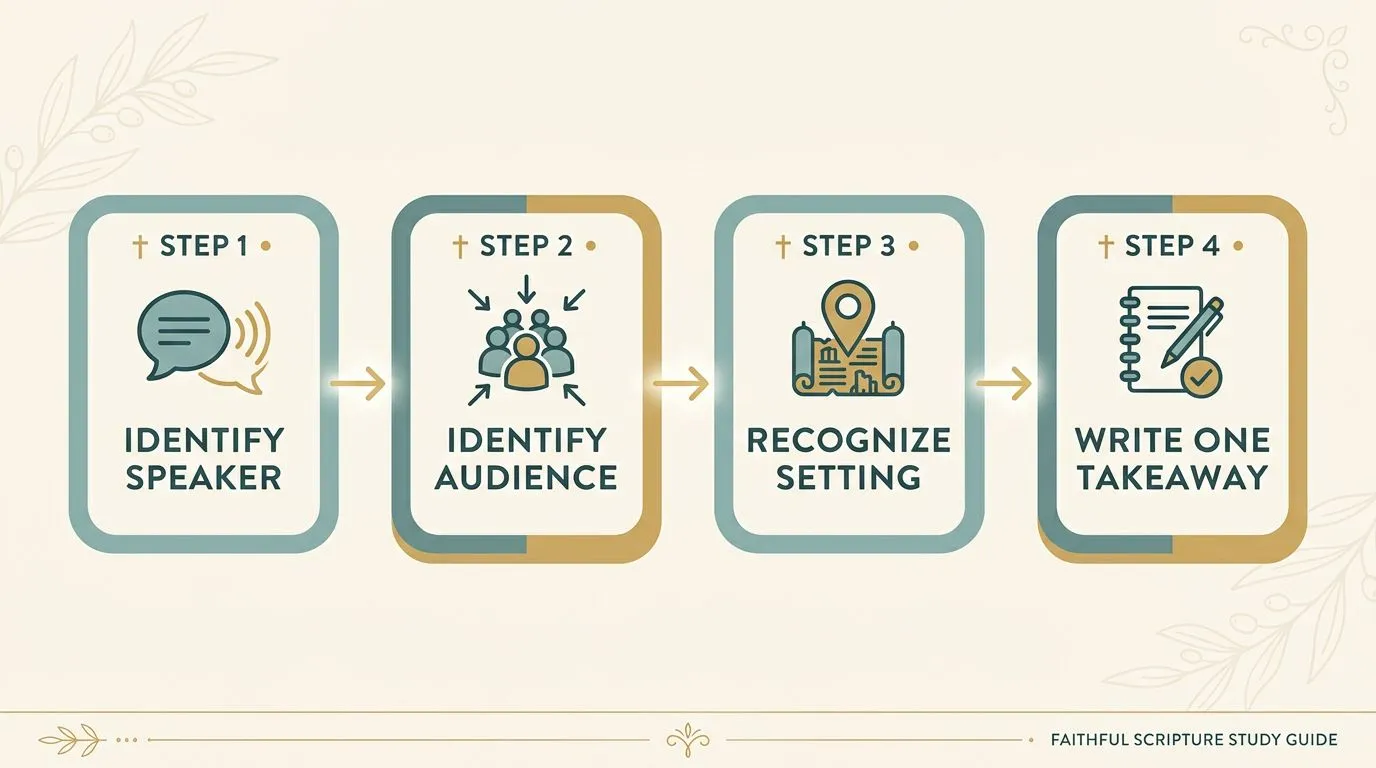
| Passage | Who is speaking or praying | Who is being addressed | Setting or context | Morning takeaway |
|---|---|---|---|---|
| Psalm 5:3 | The psalmist | The Lord | A morning plea for God to hear and receive a request | Start the day by bringing your concerns to God plainly and expectantly |
| Psalm 143:8 | The psalmist | The Lord | A prayer from someone asking for mercy, trust, and direction | Ask God to guide your steps before the day’s pressure takes over |
| Psalm 90:14 | The psalmist and the gathered people | The Lord | A prayer that looks to God’s steadfast love for daily satisfaction | Begin with gratitude, not emptiness, and let God shape your contentment |
| Psalm 30:6 | The speaker reflecting on God’s help | The Lord is implied as the one who turned sorrow | A testimony that remembers how night sorrow gave way to morning joy | Do not assume the morning will feel bright, ask God to meet you after hard nights |
| Isaiah 26:9 | The prophet or worshiping speaker | The Lord | A longing for God in the night and early morning, tied to learning what is right | Seek God early so your choices are shaped by His wisdom |
Context matters because each verse is speaking to a real spiritual situation, not offering a detached morning catchphrase.
A prayer for guidance should lead you to ask for guidance, and a verse about joy after sorrow should make room for grief instead of pretending every morning feels easy.
That is what makes the takeaway stronger. When you know the setting, you can pray the verse in a way that fits the passage instead of forcing the passage to fit your mood.
What is a simple start-the-day Bible reading plan?
A simple morning Bible reading plan can be done in a few minutes, and it works best when you keep it small enough to repeat tomorrow.
The goal is not to read the most, but to actually meet God in the verse you read.
- Read one verse slowly, then read it again and notice the word or phrase that stands out.
- Answer one short reflection question, such as what you are trusting God for, what you need Him to guide, or where you need His peace.
- Pray the verse back to God in your own words so Scripture becomes your morning prayer.
- If you have time, add a 3 to 5 minute follow-up reading from a verse of the day or a short devotional plan.
How do you pray the verse back to God?
You pray the verse back to God by changing the wording from reading to conversation.
If Psalm 143:8 says, “Let me hear of your steadfast love in the morning,” you can pray, “Lord, help me notice Your love before I listen to anything else today.”
Why does a short follow-up reading help?
A short follow-up reading helps because it gives your first verse some room to breathe without turning your morning into a long assignment.
If you already started with one verse, a brief second reading can deepen the thought while still fitting a busy schedule.
This is where a trusted Bible reading tool can help, especially if you want a steady rhythm instead of choosing randomly every morning.
Bible Gateway makes that easier with daily readings, translation options like NIV, and devotional tools tied to the verse of the day, all in one place Bible Gateway.
What should you avoid in a morning devotional?
You should avoid treating a morning verse as if its only job is to make you feel better. Scripture is meant to comfort you, but it also calls you to trust, repent, listen, and obey.
It also helps not to rush past the verse because you already know it. Familiar passages like Psalm 5:3 and Psalm 90:14 can become shallow if you read them by memory instead of with attention, especially on mornings when you need God’s words more than your own reactions.
How does the NIV and Bible Gateway help with morning reading?
The NIV and Bible Gateway help you start the day with a readable text and a reliable place to compare verses, notes, and devotional readings.
That matters when you want a morning verse that is easy to understand without losing the meaning of the passage.
Bible Gateway offers more than 200 Bible versions in over 70 languages, and its Verse of the Day can be read in your preferred translation or multiple translations.
It also offers Bible Gateway Plus as a study tool with notes and related resources beside the passage so you can slow down and reflect instead of skimming Bible Gateway.
For many readers, NIV works well in the morning because the language is clear and direct.
That makes it easier to turn a verse into prayer before the day starts asking for your attention.
What can you do after reading your morning verse?
After reading your morning verse, you can carry one sentence of Scripture into the rest of your day.
That one sentence can become the first prayer you repeat in the car, at your desk, or while you are getting the kids ready.
If you want a next step, keep it simple and steady. Choose one verse for the week, use it in prayer each morning, and ask God to shape your thoughts and choices through it.
Charles Stanley often pointed readers toward steady, Scripture-centered habits, and that kind of rhythm is what helps a morning verse grow from inspiration into discipleship.
Bible Gateway is operated by HarperCollins Christian Publishing, so if you use its tools often, you’re working with a platform built for Scripture reading and study, not for quick spiritual entertainment Bible Gateway.
Start with one verse, then let it lead your day
Choose one morning verse, read it in context, pray it honestly, and let it set the tone before your schedule takes over.
Psalm 5:3 is a strong place to begin because it invites you to bring your voice to God first, and the rest of the passages help you answer different needs with the same faithfulness.
Frequently asked questions
What if I only have 5 minutes in the morning?
Yes, five minutes is enough for a real start with God. Read one verse slowly, notice one word or phrase that stands out, and turn it into a short prayer.
Psalm 5:3 is a strong choice if you want a single morning verse that is clear, prayerful, and easy to carry into the rest of your day.
Should I use the same verse every morning or change it daily?
Either approach can work. Repeating one verse helps you remember it and pray it more deeply, while changing verses can keep your morning reading fresh and match different needs, like guidance, peace, gratitude, or trust.
A verse such as Psalm 5:3 is especially helpful if you want a steady starting point for the week.
Is a morning verse meant to replace a full Bible reading plan?
No. A morning verse is a starting point for prayer and reflection, not a replacement for broader Bible reading.
The article also suggests a simple follow-up, such as a 3 to 5 minute reading or a verse-of-the-day devotional, so your first verse can lead into deeper study later.
Can I use a morning verse as part of family devotions?
Yes, and keeping it short is a wise choice for family devotions. Read one verse aloud, ask each person to share one thought about what it says, and close with a brief prayer.
A verse like Psalm 90:14 works well because it invites gratitude and a shared focus on God’s love.


This Bible Verse Can Help You Face a Difficult Day
Psalm 46:1 is a strong Bible verse for a difficult day because it says, “ God is our refuge and strength , a very present help in trouble.” Put simply, God is…

Before Your Next Important Decision, Remember What Proverbs Says
A common mistake is treating Proverbs like a magic formula that guarantees the outcome you want if you quote the right verse. The better way is simpler, and st…

Read This Bible Verse When You're Worried About Your Future
If you’re worried about your future, start with Jeremiah 29:11. It reminds you that God knows your life, sees what you can’t see, and is still working with pur…

This Bible Verse Is a Powerful Reminder of God's Promises
Jeremiah 29:11 is one of the clearest Bible verses about God’s promises: “For I know the plans I have for you, declares the Lord, plans for welfare and not for…